 Politics
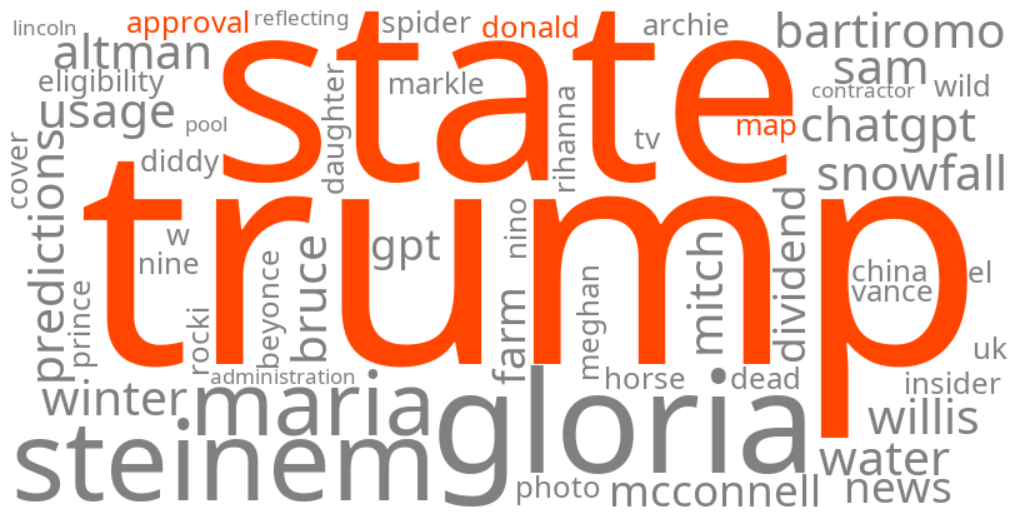
donald trump state approval map
Summary (tl;dr)
Searches for "donald trump state approval map" are trending due to recent polls showing a significant decline in President Donald Trump's approval ratings across all U.S. states just two months before the 2026 midterm elections, even in states that previously showed strong support for him.
Essential Background
Donald Trump is currently serving his second non-consecutive term as President of the United States, which commenced on January 20, 2025. The upcoming 2026 midterm elections, scheduled for November 3, 2026, will see all 435 seats in the U.S. House of Representatives and 35 of the 100 seats in the U.S. Senate contested. While Trump secured victory in the 2024 presidential election, his public approval has experienced a notable downturn since the beginning of his second term. This shift in public sentiment is largely attributed to ongoing concerns about the economy, including inflation and housing affordability, as well as widespread dissatisfaction with the protracted war in Iran.
The Full Story
As of early September 2026, President Trump's national net approval rating stands at a minus 24, with 35 percent approving and 59 percent disapproving of his job performance. A comprehensive analysis of state-level data by Newsweek, based on Civiqs' rolling online tracking poll, reveals a consistent deterioration in his approval since January 20, 2025, with every single state recording a lower net approval rating. Critically, President Trump is currently "underwater"—meaning more disapproval than approval—in every major battleground state. Even states traditionally considered Republican strongholds, such as Kentucky, Oklahoma, Wyoming, Ohio, Iowa, Texas, Nevada, and Florida, have experienced sharp drops in support, with some transitioning from positive to negative net approval. His lowest approval figures are concentrated in Democratic-leaning states, with Hawaii (-60), Vermont (-52), and Maryland (-51) showing the weakest support. Demographic data further indicates that this decline is significantly driven by younger voters, independents, and postgraduates, along with a noticeable reduction in support among white voters. Despite these challenging poll numbers, President Trump has encouraged Republican lawmakers to campaign on his administration's record and has committed to campaigning extensively in approximately 35 crucial races that will determine control of Congress. Additionally, his administration is involved in ongoing legal challenges concerning mail-in voting rules ahead of the midterms.
Why It Matters
The trending interest in Donald Trump's state approval map is significant because his declining popularity poses a substantial hurdle for the Republican Party in the upcoming 2026 midterm elections. Historically, a president's approval ratings directly influence the electoral success of their party's candidates. With control of both the House and Senate at stake, a potential Democratic majority in the House could lead to increased congressional investigations and oversight, which might impede the administration's domestic policy agenda. The shifts in state-level support signal a potentially reconfigured political landscape, suggesting that key battleground states and even some traditionally Republican areas could become far more competitive. This focus on state approval maps underscores the critical importance of state-by-state electoral performance in American politics, particularly as the nation heads towards crucial midterm elections.
Geographic Location
- Washington, D.C., District of Columbia, United States (location of the presidential administration whose approval ratings are being tracked and debated nationwide, and where national political strategy is formed)