 Business and Finance
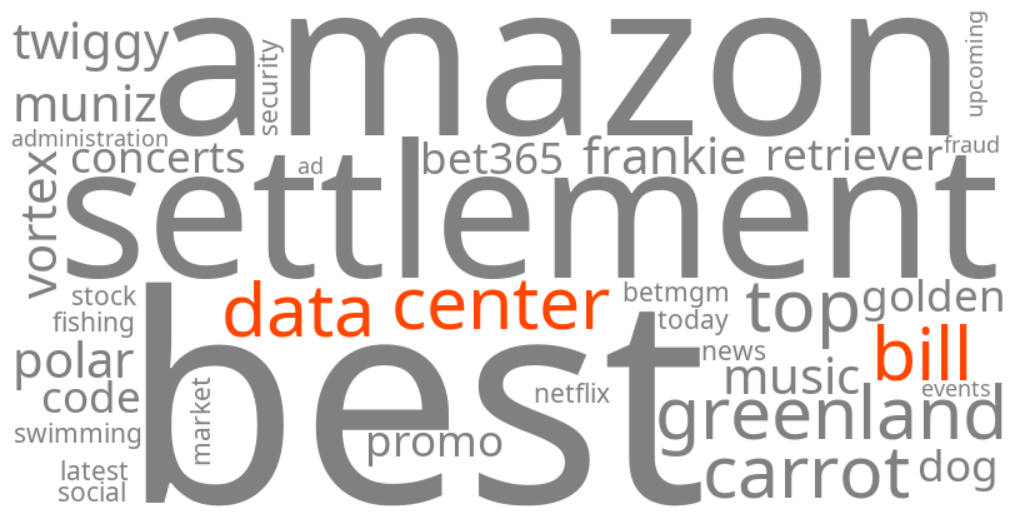
data center bill
Summary (tl;dr)
The U.S. House of Representatives recently passed the bipartisan "Ratepayer Protection Act," a bill aimed at preventing the high energy demands of data centers from increasing electricity costs for average consumers, which now moves to the Senate for consideration.
Essential Background
The rapid expansion of data centers, particularly driven by the booming Artificial Intelligence (AI) industry, has led to a significant increase in electricity consumption across the United States. This surge in demand has raised concerns about the strain on existing power grids and the potential for higher utility bills for residential and commercial customers. Historically, many states offered tax incentives to attract data center development, but public and political sentiment is shifting as the energy and infrastructure costs become more apparent.
The Full Story
"Data center bill" is trending due to the recent passage of the "Ratepayer Protection Act" by the U.S. House of Representatives on September 16, 2026, with an overwhelming 417-3 vote. This legislation encourages state utility regulators to establish standards that would require large data centers to pay the full, incremental costs of new electricity generation, transmission, and distribution infrastructure required by their operations. Introduced by Representative Gabe Evans (R-Colorado) and co-sponsored by Representative Kathy Castor (D-Florida), the bill seeks to prevent these costs from being passed on to existing ratepayers. The bill now awaits consideration in the Senate, where its passage before the November midterm elections is uncertain due to a compressed schedule. Parallel to this federal action, several states have also been actively introducing or passing legislation to regulate data centers, including measures to eliminate tax breaks or impose moratoria on new developments. For example, New Jersey recently enacted the "End Data Center Tax Credits Act," ending $250 million in incentives for large AI data centers.
Why It Matters
This legislative trend reflects a growing national debate over who should bear the costs associated with the substantial energy demands of the burgeoning AI and data center industries. Proponents of these bills argue that tech companies, not ordinary citizens, should fund the extensive infrastructure upgrades and increased power generation needed to support their facilities, especially as energy costs rise nationwide. Opponents, however, including some tech companies and previous administrations, argue that data centers bring economic benefits and that excessive regulation could stifle innovation or drive development overseas. The outcome of these bills could significantly impact the operational costs for large tech companies, influence future data center development, and potentially affect consumer electricity rates across the country.
Geographic Location
- Capitol Building, Washington, D.C., District of Columbia, United States (U.S. House of Representatives passing the Ratepayer Protection Act and introduction of other federal bills related to data center taxation and regulation)
- Trenton, Mercer County, New Jersey, United States (New Jersey's "End Data Center Tax Credits Act" becoming law)
- Arizona, United States (statewide three-year moratorium on new data center sales/use tax exemptions enacted)
- Springfield, Sangamon County, Illinois, United States (Illinois' proposed POWER Act introduced in the Senate)
- Sacramento, Sacramento County, California, United States (California considering a bill for data center tariff regime)
- Pierre, Hughes County, South Dakota, United States (South Dakota Legislature passed a bill regulating data center development)
- Oklahoma City, Oklahoma County, Oklahoma, United States (Oklahoma considering a moratorium on data center development)
- Montpelier, Washington County, Vermont, United States (Vermont state legislators proposed a data center regulation bill)