 Other
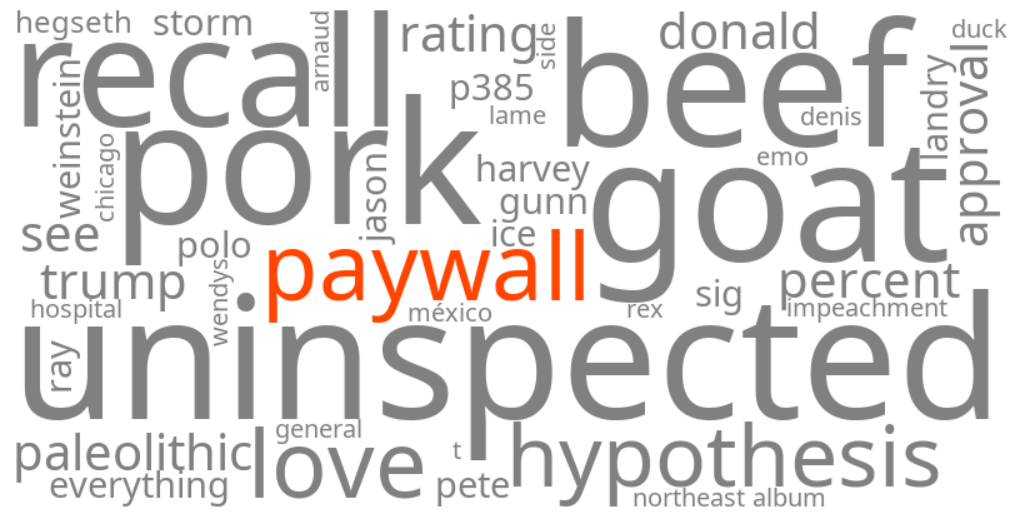
paywall
Summary (tl;dr)
"Paywall" is trending due to significant developments at the intersection of digital publishing and Artificial Intelligence (AI), driven by legal disputes over AI models using paywalled content and publishers' evolving strategies to monetize information.
Essential Background
Paywalls are digital barriers that restrict access to online content, typically requiring a paid subscription for full access. Introduced in the mid-2010s, they became a crucial revenue model for news organizations and content creators grappling with declining advertising revenue, the rise of ad blockers, and the challenge of sustaining quality journalism in the digital age.
The Full Story
The term "paywall" is currently trending as a result of its complex and often contentious relationship with rapidly advancing AI technologies. A primary driver is the ongoing legal action, most notably The New York Times' lawsuit against OpenAI and Microsoft, which addresses concerns over AI models being trained on vast datasets that include copyrighted, paywalled content without explicit licensing or compensation. This has sparked a broader debate among publishers, who are increasingly facing a "visibility paradox": while AI systems like Google's AI Overviews may cite their paywalled content, this often results in users consuming AI-generated summaries rather than visiting the publisher's site, thereby reducing direct traffic and potential revenue.
Furthermore, the trend is fueled by the growing practice of powerful AI tools and features being placed behind paywalls by major tech companies, such as Google's Gemini Advanced and OpenAI's ChatGPT Plus. This development raises ethical questions about equitable access to cutting-edge technology and the potential for a "digital underclass" to emerge. In response to these challenges, publishers are actively refining their paywall strategies, experimenting with dynamic, AI-powered paywalls that adapt to individual user behavior and offering various subscription models, including "free to read" sections and flexible passes, to optimize conversion rates and attract subscribers.
Why It Matters
The trending discourse around paywalls is vital as it directly impacts the financial sustainability of journalism and digital content creation globally. Publishers are caught between the necessity of paywalls for revenue generation and the risk of their content being ingested and repurposed by AI without reciprocal value, potentially undermining their business models and the incentive for quality reporting. Moreover, the increasing paywalling of advanced AI capabilities could exacerbate existing social inequalities by limiting access to transformative tools in education, employment, and innovation to only those who can afford premium subscriptions. This evolving landscape highlights a critical moment for shaping the future of information access, content monetization, and the ethical framework governing AI's interaction with human-created content.
Geographic Location
- New York City, New York, United States (The New York Times' lawsuit against OpenAI and Microsoft regarding AI training on paywalled content)
- San Francisco, California, United States (OpenAI, a key defendant in the lawsuit and developer of AI models that interact with paywalls)
- Redmond, Washington, United States (Microsoft, a key defendant in the lawsuit and developer of AI models that interact with paywalls)
- Mountain View, California, United States (Google, whose AI Overviews are citing paywalled content)