 Law and Government
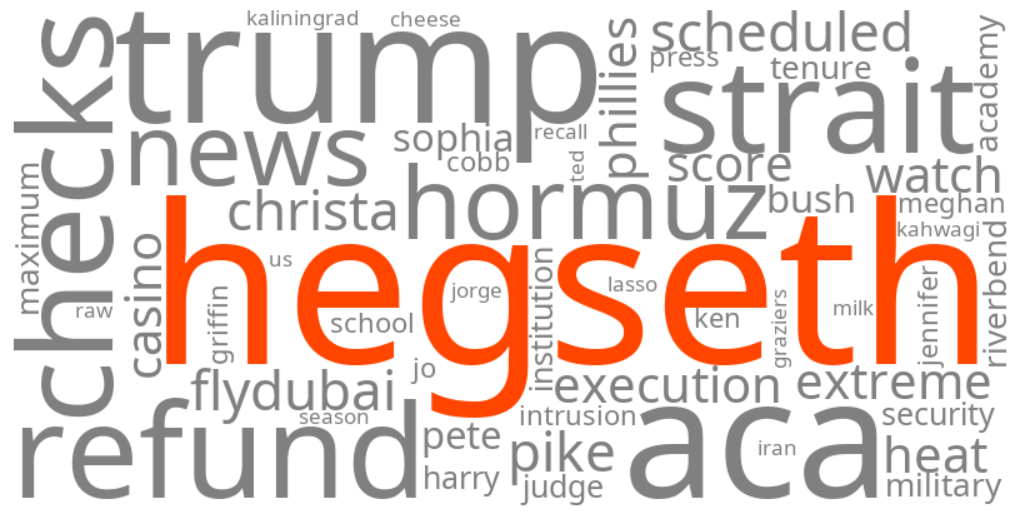
hegseth
Summary (tl;dr)
Defense Secretary Pete Hegseth is currently trending due to multiple controversies, including facing impeachment efforts over unauthorized military action in Iran, significant cuts to military leadership, and a directive to end tenure for civilian faculty at U.S. military academies. He has also directed the Department of War to secure the upcoming midterm elections from foreign threats.
Essential Background
Pete Hegseth's tenure as Defense Secretary, which began in January 2025, has been marked by a concerted effort to reshape the U.S. military. He previously served as a Fox News correspondent and has been a vocal critic of what he terms "woke" culture within the armed forces, leading to a focus on structural changes and leadership purges. Prior to the current trending events, Hegseth faced scrutiny over his management style, accusations of sharing classified information (known as "Signalgate"), and initial efforts to reduce the number of general and flag officers in the military. In April 2026, House Democrats filed six articles of impeachment against him, citing "high crimes and misdemeanors" related to military actions in Iran without congressional authorization and other official acts.
The Full Story
Defense Secretary Pete Hegseth is currently at the center of several significant political and governmental developments. He is facing intensified impeachment efforts, with both Democratic and some Republican lawmakers, including Rep. Thomas Massie, accusing him of violating the War Powers Resolution by initiating and continuing military action against Iran without proper congressional approval. Lawmakers pointed to fluctuating Pentagon casualty figures as evidence that military engagement in Iran continued despite a declared ceasefire.
Concurrently, Hegseth has confirmed plans to implement deeper cuts to the military's top ranks, aiming to reduce the number of general and flag officers by as much as 20%. This initiative, described as part of his "State of the Force" address, is viewed by critics as politically motivated and potentially damaging to the military's leadership.
Adding to these developments, Hegseth recently signed a directive halting the practice of appointing civilian faculty to tenured positions at U.S. Military Service Academies. He justified this move by citing concerns about "academic stagnation and complacency," emphasizing the academies' primary focus on warfighting. This follows a broader trend by the Trump administration to exert greater control over these institutions' faculty.
Finally, Hegseth has directed the Department of War to mobilize military intelligence and cyber forces to defend the nation's election infrastructure from foreign adversaries in anticipation of the upcoming November midterm elections. This directive comes amidst concerns that the civilian agency previously responsible for election security was "gutted" by the Trump administration.
Why It Matters
These trending developments are significant as they highlight a profound power struggle between the executive and legislative branches over war-making authority, with potential constitutional implications if impeachment proceedings advance. The drastic cuts to military leadership and the changes to military academy tenure policies signal a major ideological shift in the Department of Defense, potentially impacting military readiness, morale, and educational standards for future officers. Furthermore, the military's involvement in election security raises questions about the politicization of the armed forces and the integrity of democratic processes, especially given the preceding actions taken against civilian election security agencies. These actions collectively reflect a broader effort to reshape the U.S. military and governmental institutions according to the Trump administration's agenda, drawing both support and significant opposition from across the political spectrum.
Geographic Location
- U.S. Capitol, Washington, D.C., District of Columbia, United States (filing of impeachment articles and congressional actions)
- The Pentagon, Arlington, Virginia, United States (Defense Secretary's office and location of policy announcements)
- Marine Corps Base Quantico, Quantico, Prince William County, Virginia, United States (location of Hegseth's "State of the Force" address and announcement of military cuts)
- Iran (site of ongoing military conflict leading to War Powers Resolution concerns)
- Venezuela (site of U.S. foreign action, including the capture of Nicolás Maduro)
- United States (impact of the directive on all U.S. Military Service Academies; national application of election security directive)