 Business and Finance
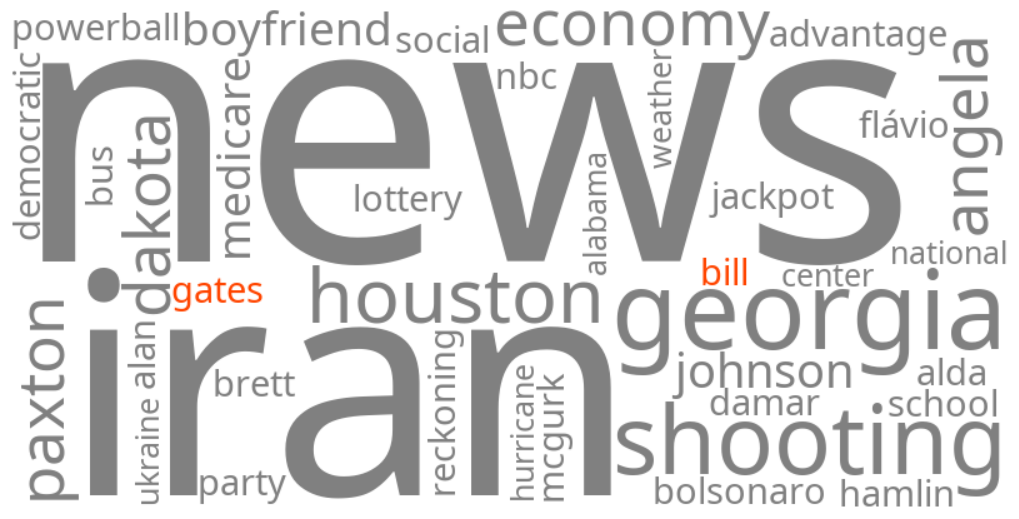
bill gates
Summary (tl;dr)
Bill Gates is currently trending in business and finance circles due to his recent calls for significant government regulation and taxation of Artificial Intelligence (AI) and robots to mitigate job displacement, alongside the Bill & Melinda Gates Foundation's historic multi-billion dollar commitment for 2026, including a substantial investment in equitable AI development.
Essential Background
Bill Gates, co-founder of Microsoft, has transitioned from a technology magnate to a prominent philanthropist and global health advocate through the Bill & Melinda Gates Foundation. Over the years, he has frequently shared his insights on technological advancements and their societal implications, often advocating for proactive measures to address potential challenges. His foundation, one of the world's largest, routinely makes significant investments in global health, development, and education.
The Full Story
Bill Gates is trending as of October 2026 due to his recent public pronouncements on the societal impact of artificial intelligence and the financial activities of his foundation. He has explicitly urged U.S. lawmakers to implement formal regulations on AI, arguing that voluntary industry self-governance is inadequate to manage the technology's inherent risks. Furthermore, Gates has proposed the taxation of AI and robots, suggesting that the current tax system incentivizes the replacement of human labor with machines and that such a tax could partially offset this effect and fund retraining initiatives for displaced workers. He believes the transition to the AI era will be one of the most turbulent periods in human history, necessitating urgent preparation.
Concurrently, the Bill & Melinda Gates Foundation has announced its largest-ever annual payout of $9 billion for 2026, marking an acceleration of its philanthropic efforts as it approaches its planned wind-down by 2045. A significant portion of this commitment includes a $1 billion pledge over the next two years specifically dedicated to expanding equitable access to AI technologies. This investment aims to ensure AI benefits the world's poorest populations in sectors such as healthcare, education, and agriculture, rather than exacerbating global inequality.
Why It Matters
Gates' calls for AI regulation and taxation are significant as they come from a highly influential figure in technology, potentially shaping public discourse and policy directions on automation and the future of work. His warnings about widespread job displacement and the need for societal adjustments underscore growing concerns about AI's disruptive potential in the business and economic landscape. Meanwhile, the Gates Foundation's record-setting budget and targeted AI investments highlight a proactive philanthropic approach to harnessing advanced technology for global good, aiming to ensure that AI serves to reduce rather than widen the gap between the rich and the poor, particularly in critical areas like health and development. This combined focus reflects a critical juncture where technological advancement, economic policy, and global equity intersect.
Geographic Location
- Seattle, Washington, United States (Bill & Melinda Gates Foundation's record philanthropic commitments and AI investment announcements)
- United States (Bill Gates' advocacy for AI regulation and taxation policy discussions addressed to U.S. lawmakers and public on U.S. media)