 Climate
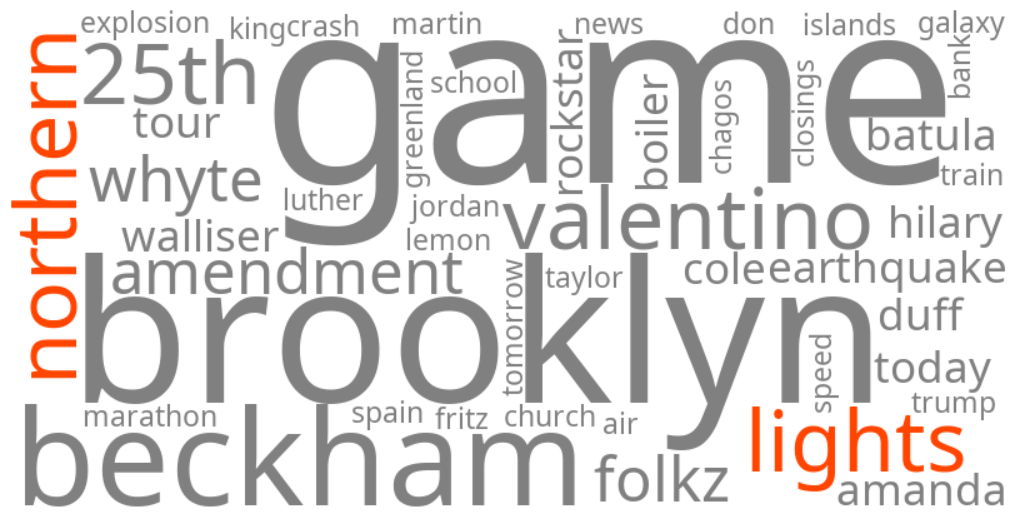
northern lights
Summary (tl;dr)
A powerful G4-level geomagnetic storm has made the Northern Lights, also known as aurora borealis, visible much farther south than usual across many U.S. states, sparking widespread public interest and searches for viewing opportunities.
Essential Background
The Northern Lights are a natural light display in the Earth's sky, predominantly seen in high-latitude regions. They occur when charged particles from the sun, typically carried by solar winds, collide with atoms and molecules in Earth's upper atmosphere, exciting them and causing them to emit light. These events are often triggered by solar flares and coronal mass ejections (CMEs) from the sun, which can lead to geomagnetic storms on Earth.
The Full Story
Google Trends keywords like "northern lights," "aurora borealis," "geomagnetic storm," and various U.S. states are trending due to a severe G4-level geomagnetic storm that impacted Earth on January 19-20, 2026. This rare and powerful storm was caused by a colossal X1.9-class solar flare and a fast-moving full-halo coronal mass ejection that erupted from the sun on January 18. The National Oceanic and Atmospheric Administration's (NOAA) Space Weather Prediction Center (SWPC) issued a rare G4 geomagnetic storm watch, indicating the potential for auroras to be visible in numerous mid-latitude U.S. states, including California, Oregon, Washington, Colorado, Utah, Massachusetts, and New Jersey, among many others. The storm's arrival occurred earlier than anticipated, leading to immediate aurora sightings and heightened public interest in viewing forecasts and visibility times for this unusual celestial event.
Why It Matters
This event is significant because a G4 geomagnetic storm is classified as "severe" and has the potential to cause disruptions to technology, including widespread voltage control problems on power grids and surface charging on satellites. Beyond potential infrastructure impacts, the storm offers a rare and spectacular opportunity for millions of people in regions not typically accustomed to witnessing the aurora borealis. The heightened visibility of the Northern Lights makes it a highly anticipated natural phenomenon, driving searches for information on when and where to best observe the colorful displays.
Geographic Location
- Northern California, California, United States (aurora visible)
- Oregon, United States (aurora visible)
- Seattle, King County, Washington, United States (aurora visible)
- Colorado, United States (aurora visible)
- Utah, United States (aurora visible)
- Massachusetts, United States (aurora visible)
- New Jersey, United States (aurora visible)
- Alabama, United States (aurora visible)
- Oklahoma, United States (aurora visible)
- Kansas, United States (aurora visible)
- Illinois, United States (aurora visible)
- Pennsylvania, United States (aurora visible)
- New York, United States (aurora visible)
- Georgia, United States (aurora visible)
- Iowa, United States (aurora visible)
- Missouri, United States (aurora visible)
- Washington, United States (aurora visible)