 Law and Government
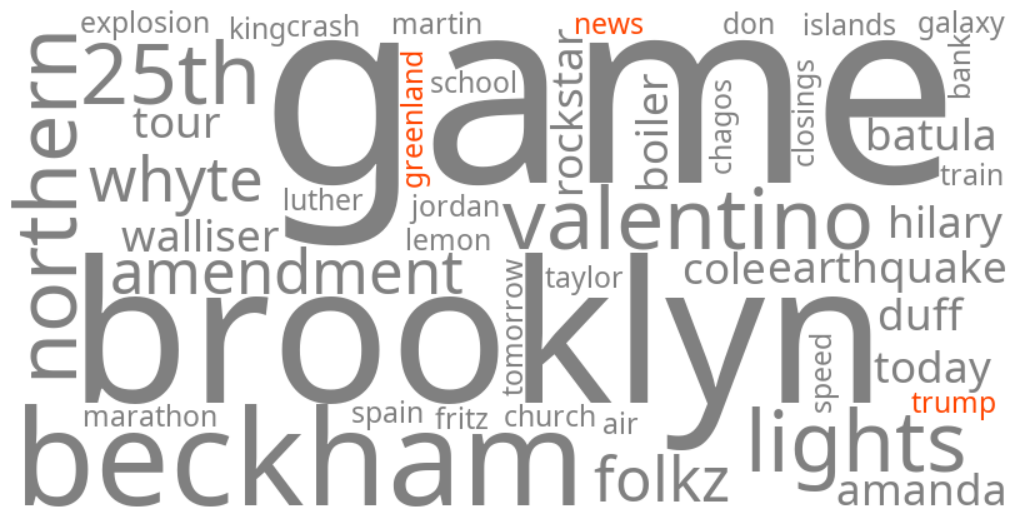
trump greenland news
Summary (tl;dr)
Donald Trump has escalated his demands for U.S. control of Greenland, threatening tariffs on European allies who oppose the move, leading to a significant diplomatic fallout and public exchanges with French President Emmanuel Macron.
Essential Background
In 2019, then-U.S. President Donald Trump publicly expressed a desire to purchase Greenland from Denmark, citing its strategic importance. The proposal was firmly rejected by both the Danish government and Greenlandic authorities, who emphasized that the territory was not for sale. The idea then largely receded from public discourse, but the geopolitical significance of the Arctic region, particularly in relation to defense and resources, has continued to be a subject of international interest.
The Full Story
Former U.S. President Donald Trump has reignited and intensified his push to gain control of Greenland, threatening to impose 10% tariffs, escalating to 25% by June 1, 2026, on goods from Denmark, Finland, France, Germany, the Netherlands, Norway, Sweden, and the United Kingdom if they do not support his objective. This aggressive stance comes in response to these European nations deploying symbolic military troops to Greenland for a training exercise, which Trump has linked to his perceived need for a "Golden Dome" missile defense system and U.S. national security. He has indicated that he does not rule out the use of force to achieve his goal.
The situation has been further exacerbated by a public diplomatic spat with French President Emmanuel Macron. Trump shared a private text message on his Truth Social platform from Macron, in which the French leader expressed bewilderment over Trump's actions regarding Greenland. Macron, in turn, has issued a stark warning of "unprecedented cascading consequences" should Greenland's sovereignty be challenged and has urged the European Union to consider activating its "trade bazooka" in retaliation against the threatened tariffs. Public protests against Trump's demands have erupted in Greenland's capital, Nuuk, and in Copenhagen, Denmark. Amidst these tensions, the North American Aerospace Defence Command (NORAD), a joint U.S.-Canada military organization, announced that U.S. and Canadian aircraft would be sent to the Pituffik Space Base in Greenland for pre-planned defense activities. Trump has also reportedly connected his hardline position on Greenland to not having received the Nobel Peace Prize, suggesting it has freed him from an "obligation to think purely of Peace."
Why It Matters
This escalating dispute over Greenland carries significant implications for international relations, particularly for the transatlantic alliance and global trade. The threat of tariffs on multiple European nations risks triggering a trade war, which could lead to economic instability, increased import costs, and a weakening of both U.S. and European economies. Trump's rhetoric, including not ruling out force and tying foreign policy to personal grievances, challenges diplomatic norms and the integrity of long-standing alliances like NATO. The Arctic region's strategic importance for defense and resources makes any attempt to alter its sovereignty a matter of global concern, potentially drawing in other major powers. The use of platforms like Truth Social to disclose private diplomatic communications also sets a precedent for how international relations are conducted and perceived.
Geographic Location
- Nuuk, Sermersooq, Greenland (protests against U.S. demands)
- Pituffik Space Base, Avannaata, Greenland (U.S. and Canadian aircraft deployment)
- Copenhagen, Capital Region, Denmark (protests against U.S. demands)
- Paris, Île-de-France, France (Macron's diplomatic actions and proposed G7 meeting)
- Miami, Miami-Dade County, Florida, United States (President Trump's statements to reporters)