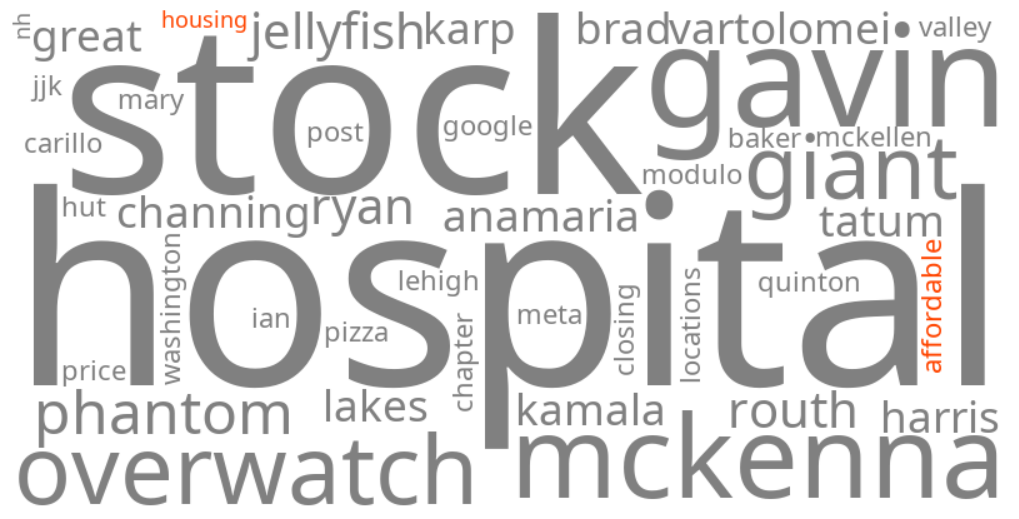
 Other
Otheraffordable housing
Summary (tl;dr)
"Affordable housing" is trending due to persistent housing affordability challenges in early 2026, driving new legislative efforts at federal, state, and local levels in the United States and the United Kingdom, alongside ongoing political discourse and significant investment announcements.
Essential Background
For several years, the United States and other nations have faced a growing housing affordability crisis characterized by high home prices, rising rents, and a severe shortage of available housing, particularly for lower-income households. This crisis has been exacerbated by factors such as stagnant wages, high mortgage rates, limited new construction, and an increase in institutional investors purchasing single-family homes. In 2024, homelessness reached record highs, driven by the inability of many to afford housing, with only 35 affordable rental homes available for every 100 extremely low-income renter households.
The Full Story
"Affordable housing" is trending in early 2026 as governments and organizations actively respond to the ongoing crisis with new policies and significant investments. In the United States, federal legislative initiatives, such as the expansion of the Low-Income Housing Tax Credit (LIHTC) through the "One Big Beautiful Bill Act," are injecting more capital into affordable housing projects. Senator Adam Schiff (D-Calif.) also introduced the "Housing BOOM Act" in late 2025, proposing measures to boost construction for affordable and middle-income housing. On February 2, 2026, Pennsylvania Senator Maria Collett announced new statewide legislation aimed at curbing corporate investor impact and facilitating Accessory Dwelling Unit (ADU) construction to increase housing supply. Simultaneously, the City of San Diego announced an additional $16.5 million investment in its "Bridge to Home" program to accelerate the creation of affordable homes. In Hawaiʻi, a new 111-unit affordable housing project was announced in Līhuʻe on February 5, 2026, through a land grant. Across the Atlantic, the UK government published a "roadmap for Section 106 affordable housing delivery" on January 28, 2026, in England, outlining measures to unblock stalled schemes and accelerate affordable housing supply. Bidding for a new £39 billion Social and Affordable Homes Programme (SAHP), aiming to deliver 300,000 homes, is set to open in February 2026.
Why It Matters
The trending nature of affordable housing underscores its critical impact on individual well-being, economic stability, and political landscapes. The ability to secure stable, affordable housing is seen as a gateway to economic opportunity, with reports highlighting disproportionate burdens on communities like Black families in urban areas. The lack of affordable housing contributes directly to record levels of homelessness and limits wealth-building for younger households. As 2026 is an election year in some regions, housing affordability has emerged as a politically charged topic, with voters increasingly demanding action from policymakers, indicating that their stance on housing could influence electoral outcomes. The new legislative pushes and financial commitments signal a concerted effort to address a crisis that affects millions, aiming to stabilize communities, stimulate economic growth, and respond to public demand for accessible housing.
Geographic Location
- Līhuʻe, Kauaʻi County, Hawaiʻi, United States (announcement of a new 111-unit affordable housing project)
- Harrisburg, Dauphin County, Pennsylvania, United States (Senator Maria Collett announced new legislation to address the state's housing affordability crisis)
- San Diego, San Diego County, California, United States (City government announced $16.5 million investment in affordable housing projects)
- California, United States (state legislative efforts for a $10 billion Affordable Housing Bond Act of 2026)
- England, United Kingdom (government published a roadmap and progress update on its social and affordable housing programs)
- Washington, D.C., District of Columbia, United States (federal policy discussions and announcements regarding housing initiatives and affordability)