 Climate
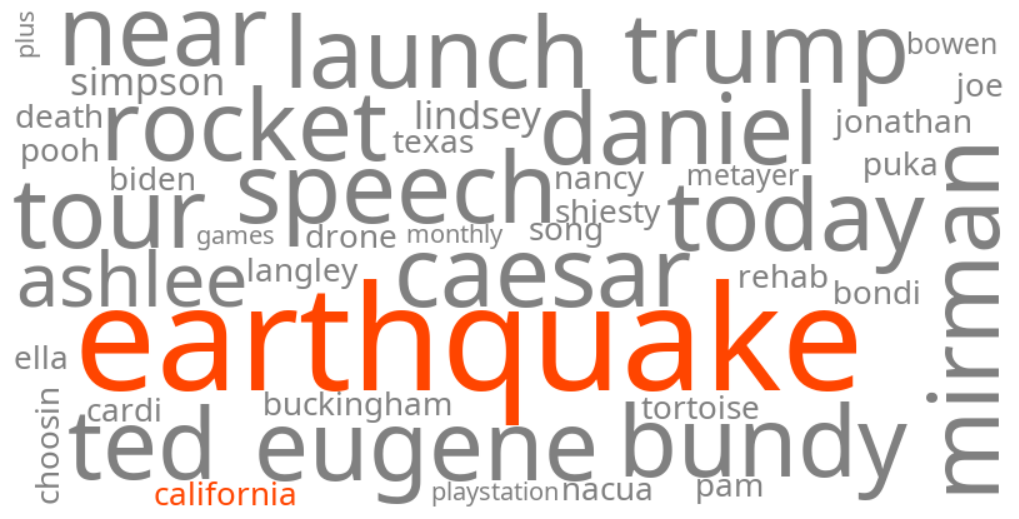
earthquake california
Summary (tl;dr)
A magnitude 4.9 earthquake in the Santa Cruz Mountains rattled the San Francisco Bay Area early on April 2, 2026, alongside ongoing seismic activity across California, leading to heightened public interest in the state's earthquake trends.
Essential Background
California is highly susceptible to earthquakes due to its location along major tectonic plate boundaries, notably the San Andreas Fault system. The state experiences thousands of earthquakes annually, ranging from minor tremors to a few large enough to cause moderate damage. Regions like the San Ramon Valley are known for recurring "earthquake swarms," which are sequences of many small earthquakes occurring in the same area over a period, reflecting ongoing adjustments within the Earth's crust.
The Full Story
"Earthquake California" is trending today following a preliminary magnitude 4.9 earthquake that struck the Santa Cruz Mountains near Boulder Creek early on Thursday, April 2, 2026, at 1:41 a.m. local time. The shallow tremor, initially reported as 5.1 before being revised, was widely felt across the San Francisco Bay Area, with residents reporting shaking in Oakland, San Francisco, and as far as Petaluma. While there were no immediate reports of significant injuries or major damage, the event prompted earthquake alerts on numerous phones, drawing considerable public attention. This significant event comes amidst a period of frequent seismic activity across California, including a magnitude 3.9 earthquake in Yermo on April 2, 2026, and a persistent earthquake swarm in San Ramon, which experienced a magnitude 3.3 quake on March 1, 2026, and dozens of smaller tremors in recent months.
Why It Matters
The trending keywords reflect Californians' inherent awareness and concern regarding seismic activity. The recent magnitude 4.9 earthquake serves as a potent reminder of the state's susceptibility to larger seismic events, prompting residents to seek information about recent quakes and preparedness measures. The continuous occurrence of smaller earthquakes and swarms, though often minor, contributes to public anxiety and underscores the importance of advanced earthquake warning systems and robust emergency preparedness protocols. Understanding these seismic trends is critical for public safety, informing building codes, urban planning, and ongoing scientific efforts to improve earthquake forecasting and mitigation strategies.
Geographic Location
- Boulder Creek, Santa Cruz County, California, United States (magnitude 4.9 earthquake epicenter on April 2, 2026)
- Yermo, San Bernardino County, California, United States (magnitude 3.9 earthquake on April 2, 2026, and magnitude 4.1 earthquake this week)
- San Ramon, Contra Costa County, California, United States (ongoing earthquake swarm, including a magnitude 3.3 earthquake on March 1, 2026)
- Cobb, Lake County, California, United States (magnitude 3.6 earthquake this month)
- Berkeley, Alameda County, California, United States (magnitude 4.3 earthquake this year)
- Gilroy, Santa Clara County, California, United States (magnitude 3.4 earthquake on March 31, 2026)
- Glenn County, California, United States (magnitude 3.2 earthquake)
- Riverside County, California, United States (earthquake on February 17, 2026)