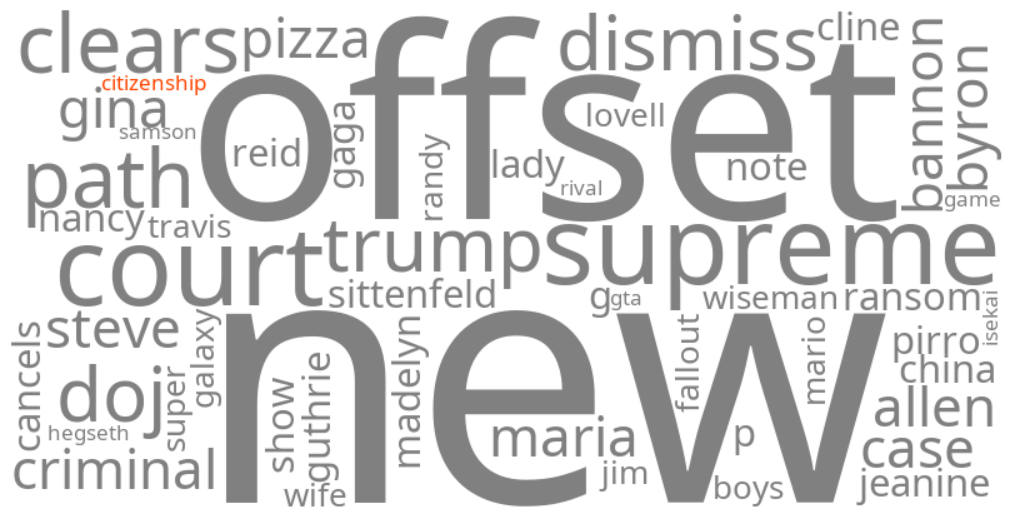
 Law and Government
citizenship
Summary (tl;dr)
Global interest in "citizenship" is surging due to a landmark U.S. Supreme Court case challenging birthright citizenship, Ukraine's new law permitting multiple citizenships, and Germany's recent and proposed reforms to naturalization and dual nationality rules.
Essential Background
Citizenship laws historically vary by nation, defining how individuals acquire and maintain nationality, including birthright citizenship (jus soli), citizenship by descent (jus sanguinis), and naturalization. Many countries, including Germany, traditionally maintained strict regulations on dual nationality. The United States, through its 14th Amendment, has long upheld birthright citizenship for those born on its soil. Ukraine, for decades, did not officially recognize multiple citizenships. However, global migration, conflict, and evolving national interests have led to recent re-evaluations and significant reforms in these countries' approaches to nationality.
The Full Story
"Citizenship" is trending due to concurrent and impactful developments in national policies. In the United States, the Supreme Court heard oral arguments on April 1, 2026, concerning President Donald Trump's executive order aiming to end birthright citizenship for children born in the U.S. to undocumented immigrants or temporary visa holders, a move challenging established constitutional interpretation. This is part of a broader U.S. policy shift, which also includes expanded biometric screenings at ports of entry, increased social media vetting for various visa applicants, and a more rigorous naturalization exam implemented in October 2025.
Meanwhile, Germany's citizenship laws have been in flux. A new law that took effect on June 27, 2024, eased naturalization by reducing the residency requirement from eight to five years and notably allowed dual citizenship. However, the "fast-track" option for naturalization after three years was repealed on October 30, 2025, restoring the five-year minimum, though dual citizenship remains permissible. Further driving the trend, Germany's conservative CDU party, at a conference in February 2026, expressed its intent to push for an eight-year residency requirement, indicating ongoing legislative debate.
Simultaneously, Ukraine legalized multiple citizenships for its citizens with a new law effective January 16, 2026. This significant change permits Ukrainians to hold foreign passports without automatically losing their Ukrainian nationality, aiming to support its diaspora, particularly those displaced by war.
Why It Matters
These legislative and judicial actions have far-reaching implications. The U.S. Supreme Court's decision on birthright citizenship could fundamentally alter the definition of American identity and citizenship rights, potentially impacting thousands of children born annually and creating a complex, multi-tiered system of belonging. The increased scrutiny and stricter naturalization process in the U.S. make the path to citizenship more challenging for many aspiring Americans.
In Germany, the evolving laws on residency and the acceptance of dual citizenship reflect an effort to better integrate long-term residents and acknowledge its increasingly diverse population. However, the political discussions suggest that the future of German citizenship policy may remain dynamic. For Ukraine, the new multiple citizenship law is a strategic move to maintain ties with its citizens abroad, offering legal security and fostering stronger connections with the homeland during a critical period of conflict and national recovery. Collectively, these global developments highlight the shifting legal and political landscapes surrounding national identity and belonging.
Geographic Location
- Washington, D.C., District of Columbia, United States (U.S. Supreme Court heard oral arguments on birthright citizenship)
- Kyiv, Ukraine (new multiple citizenship law became effective)
- Berlin, Berlin State, Germany (new citizenship law became effective and fast-track option repealed)
- Stuttgart, Baden-Württemberg, Germany (CDU party conference where a decision was made to push for tightening citizenship law)
- Montgomery County, Maryland, United States (free citizenship clinic hosted)