 Politics
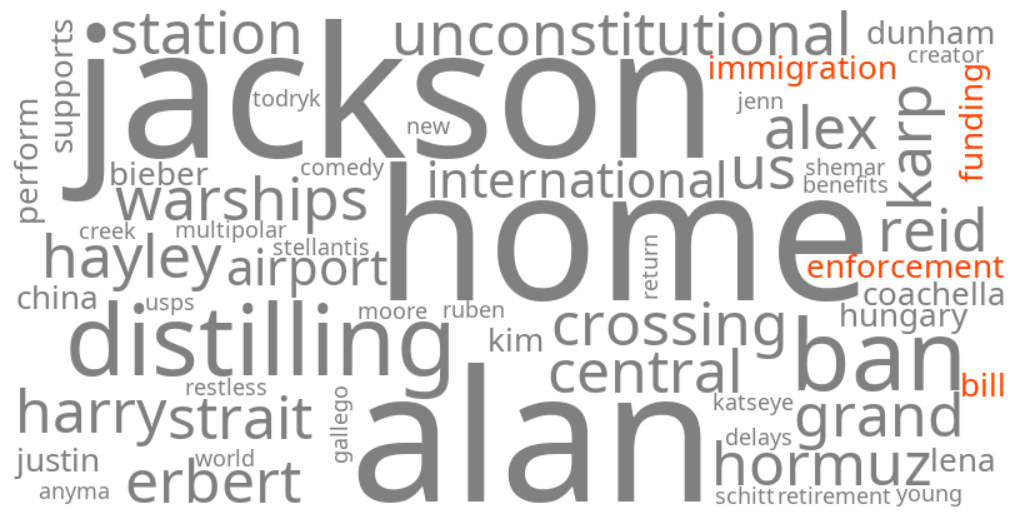
immigration enforcement funding bill
Summary (tl;dr)
Ongoing congressional debates and recent legislative actions concerning funding for U.S. immigration enforcement agencies are trending, notably amid a partial government shutdown impacting the Department of Homeland Security (DHS) and discussions surrounding new and existing immigration bills.
Essential Background
In July 2025, the "One Big Beautiful Bill" (H.R. 1) was signed into law, providing over $190 billion to the Department of Homeland Security for significantly expanded border security and interior immigration enforcement, including billions for new detention facilities and deportation operations. This substantial funding also introduced new fees for various immigration benefit applications. Since late February 2026, the Department of Homeland Security has experienced a partial government shutdown due to partisan disagreements over its annual funding, with reforms to Immigration and Customs Enforcement (ICE) and Customs and Border Protection (CBP) operations being a key sticking point.
The Full Story
"Immigration enforcement funding bill" is currently trending as the U.S. Congress grapples with a partial government shutdown affecting the Department of Homeland Security, which began in late February 2026. Senate Republicans are now moving to use a budget reconciliation process to fund DHS's immigration enforcement operations separately, a strategic move to bypass Democratic opposition and "get it done fast". This action follows a broader spending package passed in March 2026, which made specific adjustments to ICE funding, including a $115 million reduction in enforcement and removal operations and a decrease of 5,500 detention beds. This same bill allocated $20 million for body cameras for immigration enforcement agents and cut Border Patrol funding by $1.8 billion. Additionally, legislative efforts like the bipartisan "Dignity Act" are gaining endorsements, proposing pathways to legal status for some undocumented immigrants and Dreamers while also seeking to restrict ICE enforcement in sensitive areas. Another proposed bill, the "Welcoming International Success Act (WISA Act)," aims to reverse recent restrictions on the H-1B visa program.
Why It Matters
The ongoing debates and legislative actions surrounding immigration enforcement funding bills carry significant implications for national border security, the operational capacity of agencies like ICE and CBP, and the rights and treatment of immigrants in the United States. These discussions highlight deep partisan divisions on immigration policy, encompassing a spectrum of views from calls for increased enforcement and border security to demands for greater oversight, civil liberties protections, and comprehensive pathways to legal status. The substantial financial resources allocated, or proposed for allocation, directly affect detention capacities, deportation efforts, and the overall framework of U.S. immigration policy, making these funding decisions a highly contentious and closely watched issue for advocates, policymakers, and affected communities alike.
Geographic Location
- Capitol Building, Washington, D.C., District of Columbia, United States (U.S. Congress debates and passes legislation, President signs bills)
- Minneapolis, Hennepin County, Minnesota, United States (Trump administration's immigration crackdown where federal agents shot and killed two U.S. citizens, contributing to partisan breakdown on DHS funding)