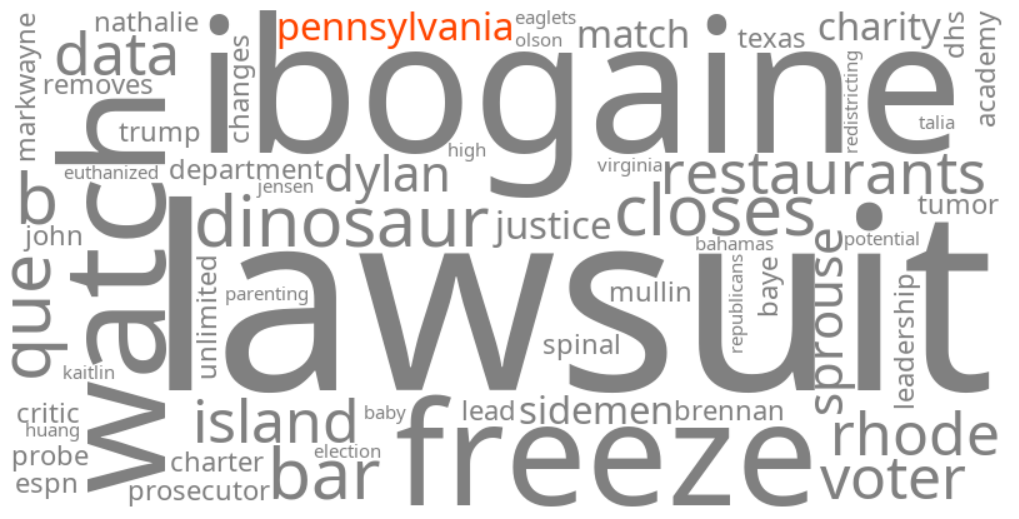
 Law and Government
pennsylvania
Summary (tl;dr)
Pennsylvania is trending due to significant legal and governmental shifts, including a Supreme Court ruling that declared mandatory life sentences for second-degree murder unconstitutional, prompting legislative efforts to reform sentencing. Concurrently, new policies from the Pennsylvania Counties Risk Pool will limit insurance coverage for counties engaged in proactive immigration enforcement, impacting local law enforcement partnerships with federal agencies.
Essential Background
For years, Pennsylvania law mandated life sentences for individuals convicted of second-degree murder, a charge that could apply even without direct intent to kill, such as in cases where a death occurred during the commission of another felony. This "felony murder" rule resulted in many individuals, including accomplices, receiving life without parole sentences. Separately, some Pennsylvania counties have entered into 287(g) agreements with U.S. Immigration and Customs Enforcement (ICE), allowing local law enforcement to assist in federal immigration enforcement, a practice that has drawn scrutiny from civil rights advocates.
The Full Story
In a landmark decision last month, the Pennsylvania Supreme Court ruled that mandatory life sentences for second-degree murder are unconstitutional, giving the state legislature 120 days to enact a legislative fix. A proposed bill aimed at addressing this ruling, which would have made individuals eligible for parole after 25 years and capped future sentences at 50 years, was recently pulled from a vote in the state House Judiciary Committee by its Democratic chair, Tim Briggs, who stated a desire for a "better deal" and more input. This move has frustrated advocates who have been pushing for years to end mandatory life sentences, raising concerns about the approaching deadline and the potential for mass resentencing if lawmakers fail to act.
Meanwhile, new developments are affecting how counties interact with federal immigration enforcement. The Pennsylvania Counties Risk Pool (PCoRP), which provides liability insurance to counties across the state, has approved changes to exclude coverage for 287(g) agreements, effective June 2026. This means counties that proactively assist ICE in immigration enforcement will need to purchase additional insurance to cover potential lawsuits, although agreements to house ICE detainees in county jails remain covered. This change directly impacts at least nine counties, including Beaver, Butler, Franklin, Washington, and Lebanon, which have signed 287(g) partnerships. Separately, the Philadelphia City Council is considering a package of bills and resolutions designed to restrict ICE operations within the city, though Mayor Cherelle Parker has expressed concerns about some of the proposed language.
Why It Matters
The Supreme Court's ruling on second-degree murder could lead to the largest resentencing effort in Pennsylvania's history, potentially impacting over a thousand individuals currently serving life sentences. The legislative debate is crucial for defining future sentencing guidelines and addressing criminal justice reform in the state. Advocates are concerned that a failure to pass a legislative fix will revert the process to the courts, leading to a much longer and more complex mass resentencing process.
The PCoRP decision regarding insurance coverage for ICE agreements marks a significant shift for county governments. It could deter counties from participating in proactive immigration enforcement due to increased financial risk, potentially altering the landscape of immigration policy at the local level within Pennsylvania. The ongoing discussions in Philadelphia further highlight a growing tension between local governance and federal immigration policies, reflecting broader national debates on immigration and law enforcement roles.
Geographic Location
- Pennsylvania, United States (statewide legal and governmental developments)
- Philadelphia, Philadelphia County, Pennsylvania, United States (City Council considering ICE bill package, local legal organization urging legislative action post-Supreme Court ruling)
- Harrisburg, Dauphin County, Pennsylvania, United States (state capital where legislative action occurs, Governor's Residence where interfaith roundtable was held)
- Delaware County, Pennsylvania, United States (banned poll workers from using election prediction markets)
- Beaver County, Pennsylvania, United States (county with 287(g) agreement affected by new insurance policy)
- Butler County, Pennsylvania, United States (county with 287(g) agreement affected by new insurance policy)
- Franklin County, Pennsylvania, United States (county with 287(g) agreement affected by new insurance policy)
- Washington County, Pennsylvania, United States (county with 287(g) agreement affected by new insurance policy)
- Lebanon County, Pennsylvania, United States (county with 287(g) agreement affected by new insurance policy)
- Berks County, Pennsylvania, United States (location of the 2023 chocolate factory explosion, leading to gas safety legislation)
- West Reading, Berks County, Pennsylvania, United States (specific location of RM Palmer Company chocolate factory explosion)