 Climate
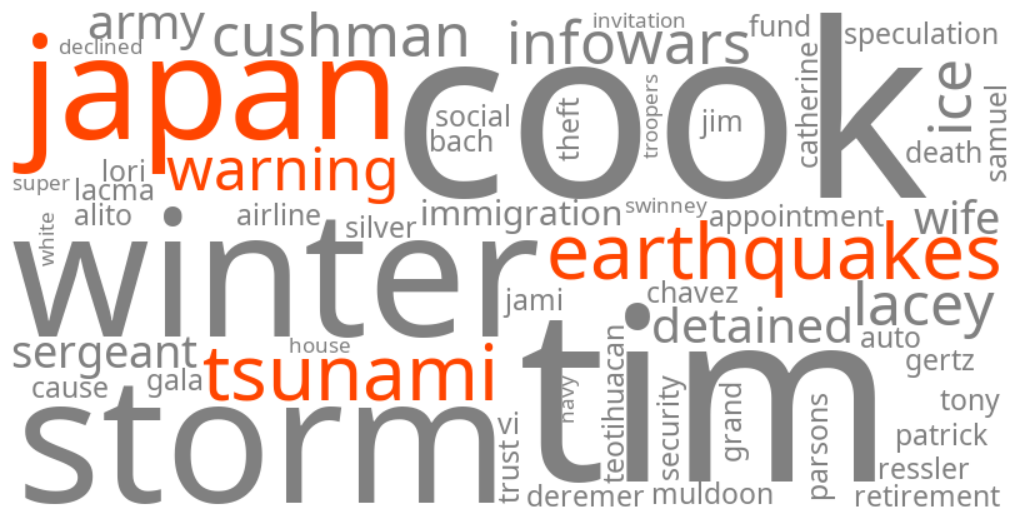
japan earthquakes tsunami warning
Summary (tl;dr)
A powerful 7.7 magnitude earthquake struck off Japan's northeastern coast on April 20, 2026, prompting tsunami warnings and evacuation advisories for several prefectures, and leading to an elevated risk assessment for a potential mega-quake.
Essential Background
Japan is highly prone to earthquakes and tsunamis due to its location on the Pacific Ring of Fire, where four major tectonic plates converge and constantly shift. The country experiences thousands of tremors annually and has developed stringent building codes and advanced warning systems in response to this seismic activity. Historically, Japan has faced devastating events, such as the 2011 Tohoku earthquake and tsunami, which serves as a constant reminder of the potential for large-scale disasters.
The Full Story
On Monday, April 20, 2026, a magnitude 7.7 earthquake (initially reported between 7.4 and 7.7) struck off Japan's northeastern coast in the Pacific Ocean, approximately 100 kilometers east-northeast of Miyako in Iwate Prefecture, at a depth of around 19-35 kilometers. The quake, which occurred at approximately 4:53 p.m. local time, was strong enough to be felt in Tokyo and triggered tsunami warnings for coastal areas of Iwate, Aomori, and Hokkaido prefectures, with waves initially forecast up to three meters high. While the highest observed tsunami wave was 80 centimeters at Kuji Port in Iwate, and a 40cm wave was recorded at Miyako Port, the warnings prompted evacuation advisories for over 128,000 to 172,000 residents in affected areas to move to higher ground. The Japan Meteorological Agency (JMA) also issued a special advisory, warning of a slightly increased (1% chance) likelihood of another major earthquake of magnitude 8.0 or stronger in the region over the next week. Minor injuries have been reported in Morioka, Iwate Prefecture, and Tohoku town, Aomori Prefecture, and some non-residential buildings were damaged in Aomori Prefecture. Bullet train services in Aomori were temporarily halted.
Why It Matters
This recent seismic activity and the subsequent tsunami warnings are significant because they highlight Japan's ongoing vulnerability to natural disasters and the effectiveness of its preparedness systems. The special advisory from the JMA regarding an increased risk of a "mega-quake" underscores the potential for further, more severe seismic events in a highly populated region. While immediate damage and casualties were minimal due to robust infrastructure and prompt evacuation efforts, the ongoing threat keeps residents and authorities on high alert, emphasizing the continuous need for vigilance and disaster readiness. The events serve as a stark reminder of the 2011 Tohoku disaster and reinforce public awareness about earthquake and tsunami safety.
Geographic Location
- Off the Sanriku coast, Iwate Prefecture, Japan (epicenter of the earthquake)
- Miyako, Iwate Prefecture, Japan (40cm tsunami wave observed)
- Kuji Port, Iwate Prefecture, Japan (80cm tsunami wave observed)
- Hachinohe Port, Aomori Prefecture, Japan (30cm tsunami wave observed, bullet train services halted)
- Urakawa, Hokkaido Prefecture, Japan (40cm tsunami wave observed)
- Morioka, Iwate Prefecture, Japan (minor injury reported)
- Tohoku town, Aomori Prefecture, Japan (minor injury reported, non-residential buildings damaged)