 Politics
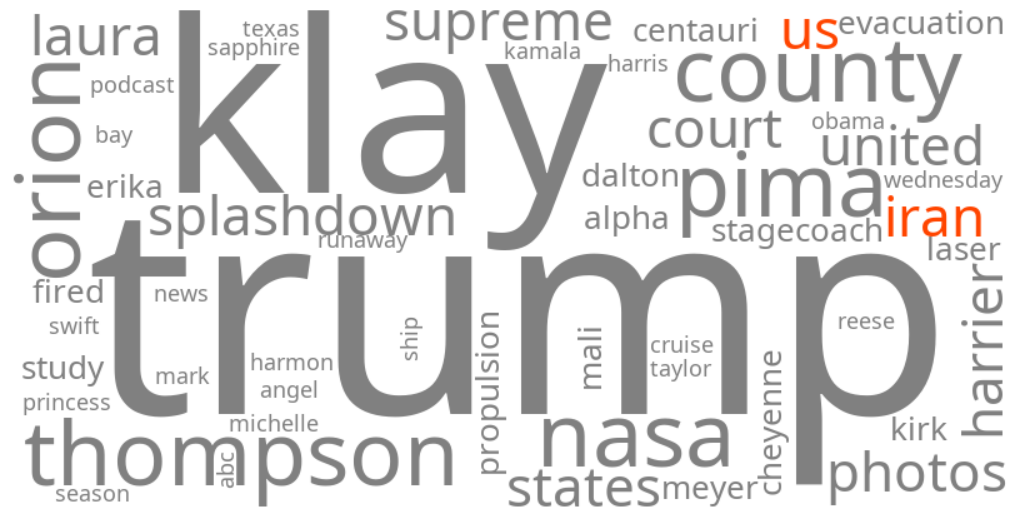
iran us
Summary (tl;dr)
Peace talks between the United States and Iran have collapsed, with U.S. President Trump canceling his envoys' trip to Pakistan after Iran's top diplomat departed, further escalating tensions in a conflict that has already seen military action and a naval blockade.
Essential Background
The "2026 Iran war" began on February 28, 2026, with joint U.S.-Israeli airstrikes on Iran, targeting military sites and assassinating Supreme Leader Ayatollah Ali Khamenei. Iran retaliated by launching missile and drone strikes against Israel, U.S. bases, and U.S.-allied Arab countries, and by closing the Strait of Hormuz, a critical global energy chokepoint. A temporary ceasefire, brokered by Pakistan, had been in place since April 8, 2026, but recent events have strained this agreement. The U.S. has also imposed a naval blockade on Iranian ports in response to Iran's control of the Strait of Hormuz.
The Full Story
Efforts to advance ceasefire talks between the United States and Iran have stalled after Iran's top diplomat, Abbas Araghchi, left Islamabad, Pakistan, before the scheduled arrival of U.S. envoys Steve Witkoff and Jared Kushner. President Donald Trump subsequently announced the cancellation of his envoys' trip, stating he had told them not to travel to Islamabad, and suggesting Iran's proposal was "not good enough". Iranian officials expressed skepticism about the sincerity of U.S. diplomacy, citing recent actions such as the naval blockade of Iranian ports and past attacks despite negotiations over its nuclear program. Iran's President Masoud Pezeshkian has stated that negotiations cannot proceed while the U.S. blockade on its ports remains.
Why It Matters
The breakdown of these talks signals a potential escalation of the ongoing "frozen conflict" between the U.S. and Iran, with significant implications for regional stability and global markets. The unresolved issues include Iran's nuclear program, its enriched uranium stockpile, missile capabilities, and support for armed proxies in the region, as well as the standoff over the Strait of Hormuz. The closure and mining of the Strait of Hormuz continue to disrupt global trade and impact oil prices, affecting economies worldwide.
Geographic Location
- Islamabad, Islamabad Capital Territory, Pakistan (location of failed ceasefire talks)
- Muscat, Oman (Iranian Foreign Minister Abbas Araghchi's travel destination after leaving Pakistan)
- Strait of Hormuz, Persian Gulf (Iranian closure and U.S. naval blockade)
- Tehran, Tehran Province, Iran (U.S.-Israeli airstrikes and assassination of Supreme Leader)
- Kharg Island, Bushehr Province, Iran (U.S. airstrikes targeting military assets)
- Natanz, Isfahan Province, Iran (U.S.-Israeli strikes targeting nuclear sites)
- Fordow, Qom Province, Iran (U.S.-Israeli strikes targeting nuclear sites)
- Isfahan, Isfahan Province, Iran (U.S.-Israeli strikes targeting nuclear sites)
- Manama, Capital Governorate, Bahrain (Iranian missile and drone strikes against U.S. military bases)
- Kuwait City, Capital Governorate, Kuwait (Iranian missile and drone strikes against U.S. military bases)
- Al Udeid Air Base, Al Rayyan, Qatar (Iranian missile and drone strikes against U.S. military bases)