 Politics
redistricting
Summary (tl;dr)
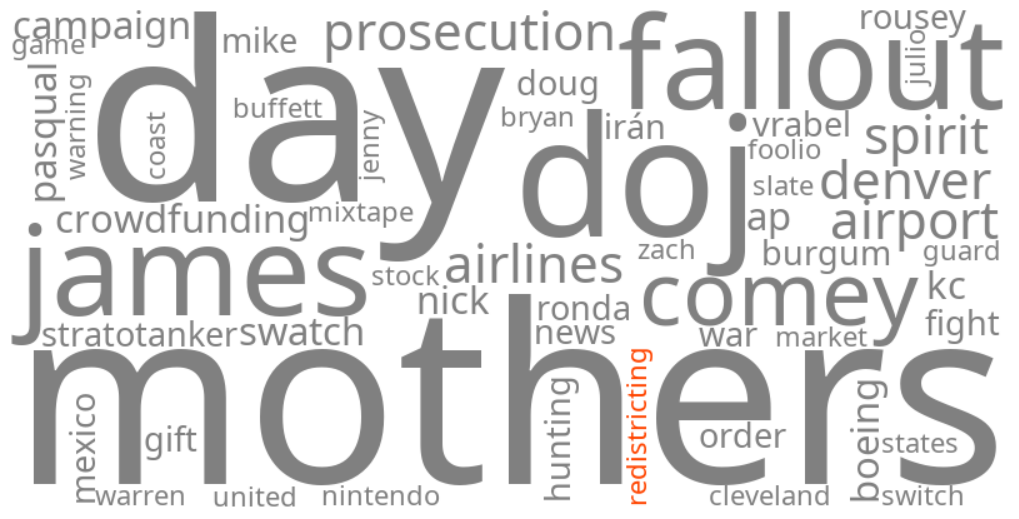
"Redistricting" is trending due to an unusual wave of mid-decade map redraws across numerous U.S. states and a recent U.S. Supreme Court ruling that has significantly impacted how districts are drawn, particularly concerning minority representation, all ahead of the crucial 2026 midterm elections.
Essential Background
Redistricting is the process of redrawing electoral district boundaries, typically for the U.S. House of Representatives and state legislatures, to reflect population changes identified by the decennial U.S. Census. This process normally occurs once every ten years following the census, with the most recent full cycle after the 2020 census. However, a less common phenomenon known as "mid-decade redistricting" is currently taking place, driven by partisan efforts to gain political advantage and legal challenges to existing maps. The Voting Rights Act of 1965 (VRA) is a crucial federal law that prohibits racial discrimination in voting, often requiring the creation of "majority-minority" districts to ensure fair representation for racial or ethnic minority groups.
The Full Story
The keyword "redistricting" is trending due to a confluence of significant events leading up to the 2026 midterm elections. On April 29, 2026, the U.S. Supreme Court issued a pivotal 6-3 decision in Louisiana v. Callais, which struck down a Louisiana congressional district specifically drawn to have a Black majority. This ruling has been widely interpreted as weakening a provision of the Voting Rights Act that previously mandated the creation of districts where minority populations could elect their preferred candidates, impacting how states can consider race in drawing district lines.
In the aftermath of this Supreme Court decision, several Southern states, including Louisiana, are moving quickly to redraw their congressional maps. Louisiana, for instance, has already suspended its May 16 primaries to allow lawmakers to create new districts. This ruling has prompted other states like Alabama, Mississippi, and South Carolina to consider or undertake their own mid-decade redistricting efforts.
Simultaneously, an unprecedented wave of mid-decade redistricting has been underway since mid-2025, initiated by Republican-controlled states like Texas at the urging of former President Donald Trump to bolster GOP chances in the 2026 midterms. In response, some Democratic-led states have also sought to redraw maps for their own partisan advantage. As of May 2026, states such as California, Florida, Missouri, North Carolina, Ohio, Tennessee, Texas, and Utah have already implemented new congressional maps.
Further adding to the trend, state courts are actively involved. For example, the Virginia Supreme Court recently struck down a Democratic-approved congressional redistricting plan on May 8, 2026, reverting the state to older maps. In New York, a state judge ruled in January 2026 that the 11th Congressional District unconstitutionally diluted minority votes and ordered a redraw, though the U.S. Supreme Court has since issued a stay on that order. Tennessee passed a new congressional map on May 7, 2026, while Mississippi's legislature will convene a special session in late May to review judicial district maps.
Why It Matters
The current surge in redistricting activity is highly significant because it directly impacts the balance of power in the U.S. House of Representatives for the upcoming November 2026 midterm elections. Both major political parties are strategically redrawing district lines, a practice often referred to as gerrymandering, to maximize their electoral advantage. The Supreme Court's ruling in Louisiana v. Callais could lead to a reduction in majority-minority districts, potentially diminishing the voting power of minority populations and shifting more seats towards Republicans. This unprecedented mid-decade redistricting battle is creating uncertainty about the electoral landscape and highlights the intense partisan struggle for control of Congress.
Geographic Location
- United States Supreme Court, Washington, D.C., District of Columbia, United States (Issued ruling in Louisiana v. Callais and stayed a New York redistricting order)
- Louisiana, United States (Governor postponed congressional primaries and legislature to redraw maps)
- Virginia, United States (State Supreme Court struck down new congressional map)
- Tennessee, United States (Legislature passed a new congressional map)
- Mississippi, United States (Legislature to convene special session for judicial redistricting)
- New York, United States (State judge ordered redraw of 11th Congressional District)
- Texas, United States (Implemented new congressional maps)
- California, United States (Implemented new congressional maps)
- Florida, United States (Implemented new congressional maps)
- Missouri, United States (Implemented new congressional maps)
- North Carolina, United States (Implemented new congressional maps)
- Ohio, United States (Implemented new congressional maps)
- Utah, United States (Court-ordered new congressional maps)
- Alabama, United States (Congressional maps subject to ongoing litigation and potential redraw)
- South Carolina, United States (Considering new U.S. House map)
- Georgia, United States (Congressional maps subject to ongoing litigation)