 Law and Government
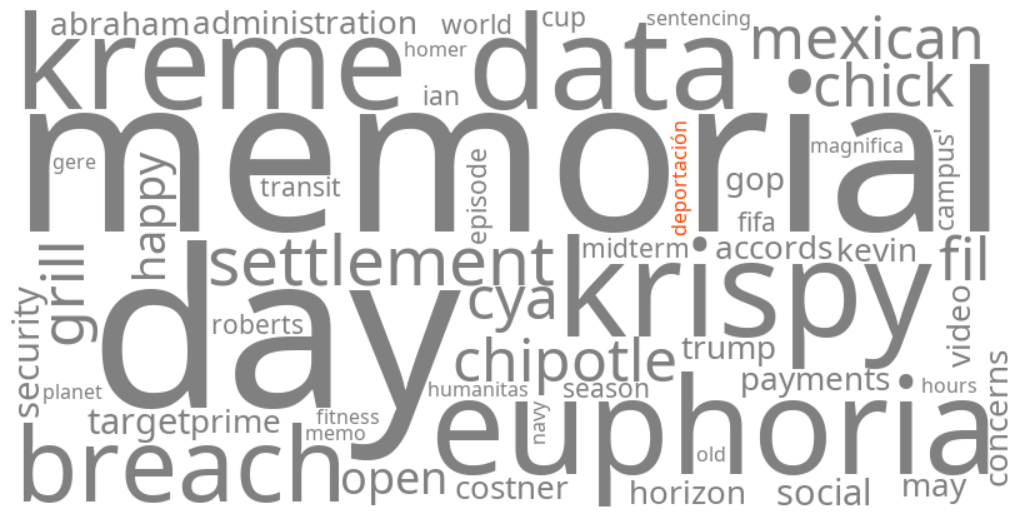
deportación
Summary (tl;dr)
The term "deportación" (deportation) is trending due to the Trump administration's aggressive new immigration policies aimed at expediting mass deportations, including a significant increase in immigration judges, stricter rules for green card applicants, higher fines for certain migrants, and enhanced scrutiny of existing legal residents.
Essential Background
Immigration has consistently been a defining and often divisive political issue in the United States, with various administrations implementing different approaches to border security and legal immigration pathways. The current administration has historically prioritized a deterrence-focused approach, emphasizing strong border enforcement and increased deportations. This has led to ongoing debates over the treatment of undocumented immigrants, asylum seekers, and even those with temporary legal statuses such as Deferred Action for Childhood Arrivals (DACA), which has faced numerous legal challenges and policy shifts over the years.
The Full Story
"Deportación" is trending as the Trump administration escalates its efforts to enforce and expand its mass deportation agenda across the United States. In May 2026, the Justice Department onboarded its largest-ever class of over 80 new federal immigration judges, a move intended to accelerate the processing of deportation cases and address a backlog of 3.7 million cases. Acting Attorney General Todd Blanche stated that the administration is committed to "reestablishing the rule of law" in the immigration system and will seek to remove judges who are perceived as slow or not adhering strictly to the law.
In a significant policy reversal, U.S. Citizenship and Immigration Services (USCIS) announced a new rule largely requiring non-citizens lawfully present in the U.S. who are eligible for green cards to leave the country and apply from their home countries. This departs from a decades-old practice allowing many, including spouses of U.S. citizens, visa holders, refugees, and asylum seekers, to adjust their status from within the U.S., with exceptions only for "extraordinary circumstances".
Furthermore, the Department of Homeland Security (DHS) has proposed a drastic increase in fines for migrants with "in absentia" (issued when the individual did not appear in court) deportation orders, raising the penalty from approximately $5,130 to $18,000. USCIS has also established a new "deportation unit" composed of 40 officers specifically tasked with reviewing existing green card holders' files for any potential misrepresentation or fraud, making long-term legal residents vulnerable to removal. The Board of Immigration Appeals recently reinforced that DACA status alone does not guarantee protection from deportation, potentially exposing more DACA recipients to removal proceedings. This period has also seen a reported increase in deaths within ICE custody, sparking concerns about conditions in detention facilities. The administration also issued an executive order requiring banks to scrutinize clients' citizenship.
Why It Matters
These sweeping policy changes signal a hardened stance on immigration enforcement that could dramatically alter the lives of millions. The push to fast-track deportations and target judges raises significant concerns about due process and the fair administration of justice within immigration courts. The new requirement for green card applicants to leave the country for processing could lead to prolonged family separations, creating immense hardship and potentially blocking many eligible individuals from achieving permanent residency, particularly those from countries facing existing visa bans.
The substantial increase in fines places a heavy financial burden on vulnerable migrant populations, while the creation of a special unit to review existing green cards introduces a new layer of uncertainty and fear for legal permanent residents. The reported rise in deaths in ICE detention centers underscores critical humanitarian issues within the detention system. Overall, these measures are seen by critics as prioritizing enforcement and deterrence over family unity and established legal immigration pathways, fundamentally reshaping the U.S. immigration landscape.
Geographic Location
- Washington, D.C., District of Columbia, United States (announcement of new immigration judges and policy changes by Justice Department and USCIS)
- Phoenix, Maricopa County, Arizona, United States (Acting Attorney General Todd Blanche addressed Border Security Expo regarding immigration enforcement)
- Tucson, Pima County, Arizona, United States (protest at ICE building over DACA recipient arrest)
- Adelanto, San Bernardino County, California, United States (ICE detention facility where multiple deaths have occurred)
- Austin, Travis County, Texas, United States (federal judge issued preliminary injunction blocking parts of Texas' SB 4 law)
- New York City, New York County, New York, United States (federal judge banned most arrests by federal agents in and around three Manhattan immigration court buildings)