 Other
Othersonic boom
Summary (tl;dr)
A loud boom and shaking experienced across South Carolina on May 28, 2026, initially led many to believe an earthquake had occurred, but the U.S. Geological Survey confirmed it was a sonic boom.
Essential Background
A sonic boom is a sound associated with shock waves created when an object travels through the air faster than the speed of sound, sounding similar to an explosion or thunderclap. In contrast, an earthquake is the shaking of the Earth's surface resulting from a sudden release of energy in the lithosphere, typically caused by tectonic plates slipping past one another along faults. South Carolina has experienced a notable increase in actual earthquake activity recently, with 22 confirmed earthquakes in the state by late May 2026 alone. This recent seismic activity may have contributed to the public's initial assumption that the boom was an earthquake.
The Full Story
On Thursday, May 28, 2026, residents across the Midlands region of South Carolina, including areas around Columbia, reported hearing a massive boom and feeling a brief shaking around 5:24 p.m. local time. The widespread nature of the event, felt as far as Florence and North Augusta, prompted significant public concern and speculation about an earthquake. However, the U.S. Geological Survey (USGS) quickly issued a notice clarifying that the incident was a "Magnitude 0.0 Sonic Boom," centered approximately six kilometers north-northeast of Saint Andrews, South Carolina. USGS seismologists explicitly stated that the event was not an earthquake, as the recorded waves and eyewitness reports were consistent with an atmospheric source rather than seismic activity. While the exact source remains officially unidentified, theories included military aircraft, which Shaw Air Force Base stated were not in the Columbia area at the time, or a meteor, which NASA scientists deemed unlikely due to lack of satellite detections or fireball reports. Experts suggest the boom was most consistent with an aircraft exceeding the speed of sound, with atmospheric conditions potentially causing the sound to travel over a larger area.
Why It Matters
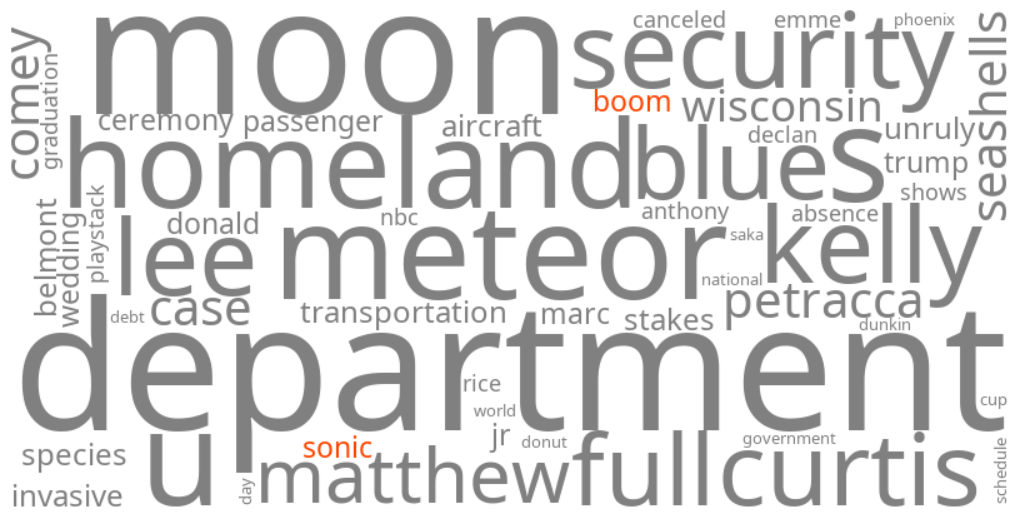
The trending keywords highlight public confusion and concern when an unusual, impactful event occurs, especially when it mimics a natural disaster like an earthquake. The rapid response and clarification from authorities like the USGS are crucial in distinguishing between natural seismic events and man-made or atmospheric phenomena. This event underscores how local seismic activity (with South Carolina experiencing multiple small earthquakes in recent weeks) can heighten public sensitivity to ground shaking and loud noises, leading to immediate searches for information and confirmation. Understanding the difference between a sonic boom and an earthquake helps educate the public and prevents unnecessary alarm, while also raising questions about the source of such powerful atmospheric disturbances.
Geographic Location
- Saint Andrews, Richland County, South Carolina, United States (centered location of the sonic boom)
- Columbia, Richland County, South Carolina, United States (area where boom was widely heard and felt)
- Midlands region, South Carolina, United States (broader region affected by the sonic boom)
- Lexington County, South Carolina, United States (area where boom was felt)
- Florence, Florence County, South Carolina, United States (area where boom was felt)
- North Augusta, Aiken County, South Carolina, United States (area where boom was heard)