 Law and Government
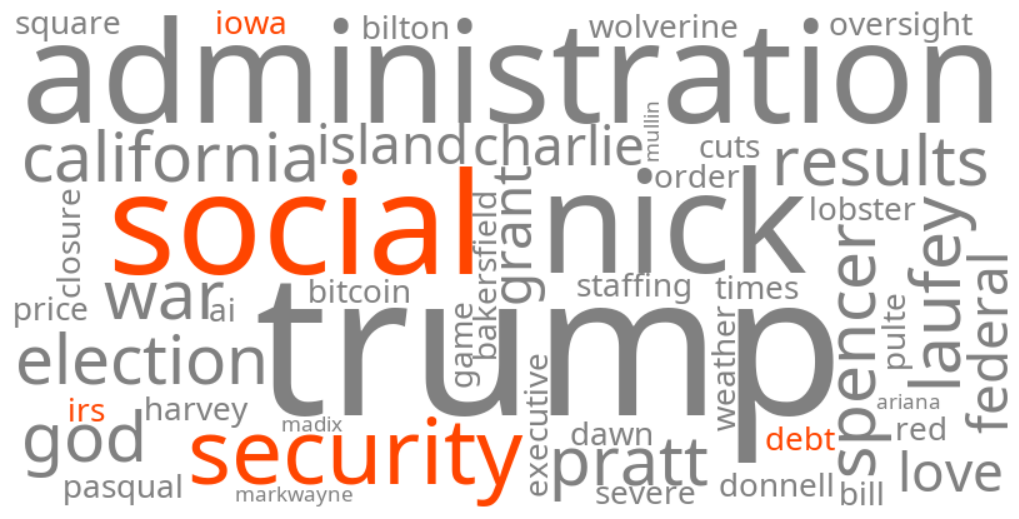
irs social security debt iowa
Summary (tl;dr)
Keywords are trending due to a recent case in Iowa where the IRS seized a man's tax refund to recover a Social Security overpayment from 30 years ago, highlighting widespread concerns about the Social Security Administration's debt collection practices.
Essential Background
The Social Security Administration (SSA) is legally mandated to recover overpayments that occur when a beneficiary receives more money than they were entitled to, whether due to administrative error, changes in income, or other life circumstances. Historically, there has been no statute of limitations on the SSA's ability to collect these debts, allowing the agency to pursue repayments decades after an overpayment occurred. The Internal Revenue Service (IRS) can assist in this collection by intercepting federal tax refunds to satisfy debts owed to government agencies like the SSA.
The Full Story
The keywords "IRS social security debt Iowa" are currently trending due to a prominent case involving Christopher Storm, a resident of Treynor, Iowa. In May and June 2026, Storm's federal tax refund was seized by the IRS to recoup an $8,000 (later revised to $10,000) Social Security survivor benefit overpayment from 1996, when he was a teenager. This event has drawn attention to the SSA's practice of "clawbacks" for aged debts. In response to increasing public scrutiny and media reports about such incidents, the SSA has recently made policy adjustments. As of March 25, 2024, the SSA began collecting new overpayments from Social Security Disability Insurance (SSDI) at a rate of 10% of monthly benefits, or $10, whichever is greater, rather than the previous 100% withholding. However, in March 2025, the SSA announced it would reinstate a 100% withholding rate for new overpayments, but quickly revised this on April 25, 2025, to a maximum of 50% for Title II Social Security Disability Insurance benefits, while the 10% rate for Supplemental Security Income (SSI) overpayments remains. Additionally, U.S. Representative Zach Nunn of Iowa introduced the bipartisan Social Security Overpayment Relief Act in March 2025, which aims to limit the SSA's lookback period for reclaiming overpayments to 10 years, unless fraud is involved.
Why It Matters
This trend highlights the significant financial and emotional distress experienced by individuals who are suddenly faced with demands to repay old Social Security debts, often through the unexpected seizure of tax refunds. The indefinite lookback period and the fact that overpayments can arise from complex factors, including SSA errors, raise concerns about fairness and the impact on vulnerable populations, particularly seniors and those on fixed incomes. The ongoing public discourse, legislative proposals, and SSA policy adjustments demonstrate a growing recognition of the need to balance the agency's responsibility to recover improper payments with protecting beneficiaries from undue hardship.
Geographic Location
- Treynor, Pottawattamie County, Iowa, United States (location of Christopher Storm, whose tax refund was seized by the IRS for Social Security debt)
- Council Bluffs, Pottawattamie County, Iowa, United States (area where Christopher Storm resides and where attorney Keith Buzzard, who handles overpayment cases, practices)
- Des Moines, Polk County, Iowa, United States (location where U.S. Representative Zach Nunn introduced legislation concerning Social Security overpayments)
- Washington, D.C., District of Columbia, United States (location of the U.S. Congress, where Representative Nunn introduced legislation and where the Social Security Administration and IRS have their federal operations, impacting these policies)