 Law and Government
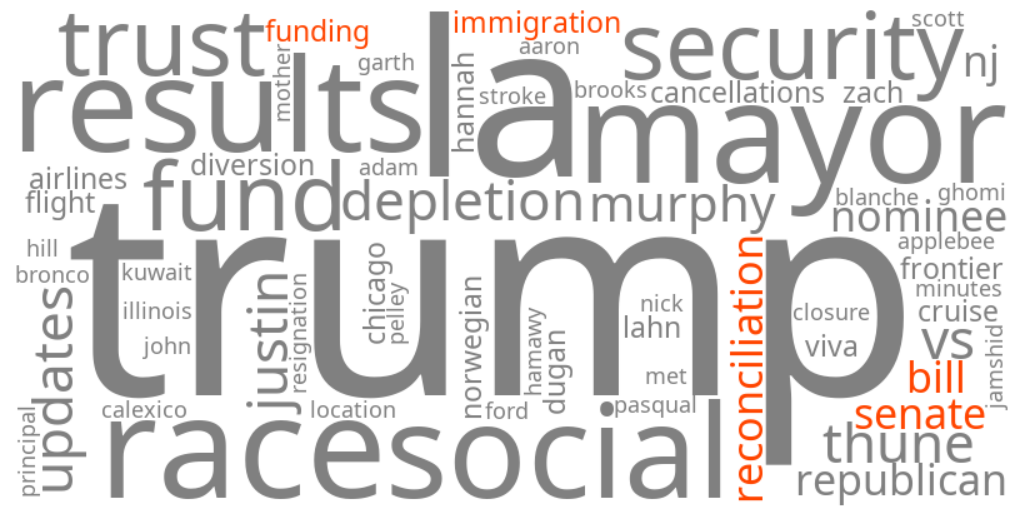
senate reconciliation bill immigration funding
Summary (tl;dr)
Senate Republicans are advancing a $72 billion reconciliation bill to significantly fund Department of Homeland Security (DHS) immigration agencies, circumventing Democratic opposition, but the legislative effort has been complicated by internal disagreements, particularly regarding a controversial Justice Department "anti-weaponization" fund and previously proposed funding for a White House ballroom.
Essential Background
The Senate reconciliation process is a special legislative tool that allows certain budget-related bills to pass with a simple majority (51 votes, or 50 plus the Vice President as a tie-breaker) instead of the usual 60 votes required to overcome a filibuster. This process begins with a budget resolution setting spending targets and instructing committees to draft relevant legislation. Earlier this year, the Department of Homeland Security experienced a shutdown, as Democrats opposed funding for Immigration and Customs Enforcement (ICE) and Customs and Border Protection (CBP) without certain reforms. This led Republicans to pursue funding for these agencies separately through the reconciliation process.
The Full Story
Currently, Senate Republicans are pushing forward with a $72 billion reconciliation package aimed at funding DHS immigration agencies, specifically ICE and CBP, through fiscal year 2029. This move utilizes the reconciliation process to bypass the Senate's typical 60-vote threshold, enabling passage with a simple majority composed solely of Republican votes.
The passage of this bill has been fraught with contention. A significant hurdle was a proposed $1 billion in security funding for President Trump's East Wing renovation, which included plans for a large ballroom. This provision faced considerable scrutiny and was ultimately dropped from a revised version of the bill after the Senate Parliamentarian ruled it violated the Byrd Rule, which limits non-budgetary provisions in reconciliation bills.
More recently, the bill's progress was delayed due to a newly established $1.776 billion Justice Department "anti-weaponization" fund. This fund, created as part of a settlement in a lawsuit by President Trump against the IRS, is intended to provide payouts to individuals alleging federal government "weaponization" against them. This has caused significant division among Republicans and drawn criticism from Democrats due to concerns about its oversight and potential beneficiaries, including some individuals involved in the January 6th Capitol attack. Although Acting Attorney General Todd Blanche has stated the fund is not moving forward, some Republicans remain skeptical. Despite these obstacles, the Senate is scheduled to vote on a motion to proceed with the measure as Congress returns from recess.
Why It Matters
This legislative effort carries substantial implications for U.S. immigration policy, as it would significantly increase funding for immigration enforcement agencies, thereby impacting border security and the overall approach to immigration. The reliance on the reconciliation process underscores the deep partisan divide in Congress over immigration and budgetary priorities, allowing the majority party to implement its agenda without needing bipartisan support. Furthermore, the internal Republican debates over the "anti-weaponization" fund and the scrapped ballroom funding highlight internal party divisions and provide key talking points for both parties in upcoming elections. The large sum of money involved also raises questions about its broader budgetary impact, especially given past reconciliation bills that have offset spending with cuts to other federal programs. The role of the Senate Parliamentarian in enforcing the Byrd Rule serves as a critical check, ensuring that legislative provisions adhere to the budgetary nature of reconciliation.
Geographic Location
- Capitol Building, Washington, D.C., District of Columbia, United States (legislative actions, committee meetings, and floor votes on the reconciliation bill)