 Law and Government
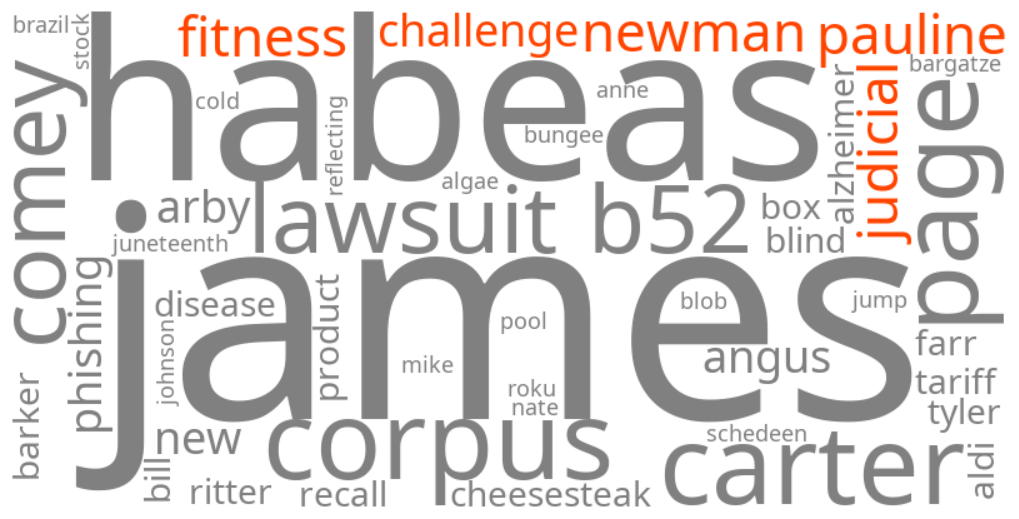
pauline newman judicial fitness challenge
Summary (tl;dr)
U.S. Supreme Court has declined to hear the case of 98-year-old federal appeals judge Pauline Newman, who was suspended from her duties due to concerns about her cognitive fitness and who challenged her suspension as unconstitutional.
Essential Background
Pauline Newman is a U.S. Circuit Judge for the United States Court of Appeals for the Federal Circuit, appointed in 1984 by President Ronald Reagan, making her the longest-serving active federal judge. In March 2023, the Federal Circuit's Chief Judge, Kimberly A. Moore, initiated an investigation into Judge Newman's fitness to serve, citing concerns about her productivity, cognitive ability, memory loss, and confusion. Newman refused to cooperate with requests for medical evaluations and to release her medical records, maintaining that she is fit for duty.
The Full Story
In September 2023, Judge Newman was suspended from hearing new cases by the Federal Circuit's judicial council due to her refusal to participate in the medical evaluations. She subsequently filed a lawsuit in the U.S. District Court for the District of Columbia, challenging the constitutionality of the Judicial Conduct and Disability Act, arguing that her suspension effectively removed her from office in violation of the constitutional provision for lifetime tenure for federal judges, which can only be ended through impeachment.
In July 2024, the U.S. District Court dismissed her claims, a decision upheld by the U.S. Court of Appeals for the District of Columbia Circuit in August 2025, which stated it lacked jurisdiction to review her constitutional challenges. The Judicial Conference Committee on Judicial Conduct and Disability also affirmed her continued suspension in March 2026. Most recently, on Monday, June 15, 2026, the U.S. Supreme Court declined to review Judge Newman's appeal, effectively turning away her bid to return to the bench.
Why It Matters
This judicial fitness challenge is trending because it represents a rare and public dispute over the competency of a federal judge, raising critical questions about judicial independence, due process, and the lifetime tenure guaranteed to federal judges by the U.S. Constitution. Opponents of the suspension argue it amounts to an unconstitutional "stealth impeachment" by her colleagues, bypassing the impeachment process reserved for Congress and potentially setting a precedent that could undermine the independence of the federal judiciary. The case highlights ongoing societal debates about the mental fitness of aging public servants and the mechanisms for addressing such concerns within a system designed to protect judicial autonomy.
Geographic Location
- Washington, D.C., District of Columbia, United States (initiation of judicial fitness investigation by Federal Circuit Chief Judge, multiple legal challenges filed in U.S. District Court, U.S. Court of Appeals for the D.C. Circuit, and U.S. Supreme Court)