 Technology
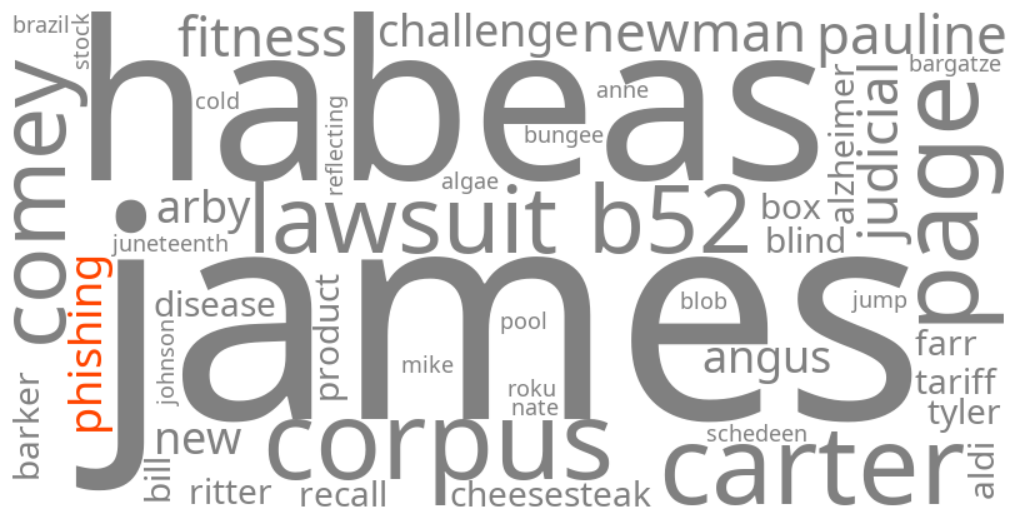
phishing
Summary (tl;dr)
Phishing attacks are currently a major concern, trending due to their increased sophistication, driven by AI, and widespread targeting of individuals across online shopping and technology platforms.
Essential Background
Phishing has long been a prevalent cybercrime, involving deceptive tactics to trick individuals into revealing sensitive information like login credentials or financial data. Traditionally, these attacks relied on poorly crafted emails with obvious errors. However, the landscape of cyber threats has continuously evolved, with attackers constantly seeking new methods to bypass security measures and exploit human vulnerabilities.
The Full Story
The keyword "phishing" is trending significantly within the technology and shopping categories due to a surge in highly sophisticated and targeted attacks. Recent reports indicate that generative AI tools are being heavily leveraged by cybercriminals to create incredibly convincing phishing emails, deepfake impersonations, and voice cloning for "vishing" (voice phishing). These AI-powered techniques allow attackers to craft personalized messages that mimic legitimate communications, making them much harder for users to detect.
A major focus of these attacks is online shopping, with scammers creating "pixel-perfect" fake e-commerce sites that can even appear in AI-generated shopping recommendations. These fraudulent sites often clone legitimate retailers, offer enticing discounts, and aim to steal payment information. Beyond email, phishing tactics have diversified to include SMS-based phishing ("smishing"), voice calls ("vishing"), and QR code-based phishing ("quishing"), further expanding the attack surface. The Anti-Phishing Working Group (APWG) observed nearly one million phishing attacks in the fourth quarter of 2024, highlighting the persistent high volume of these threats.
Why It Matters
This trend is critical because phishing remains the primary entry point for over 90% of successful cyberattacks, leading to substantial financial losses and data breaches for both individuals and organizations. The FBI's Internet Crime Complaint Center (IC3) reported 193,407 phishing complaints in the United States in 2024, the most reported internet crime, with reported losses tripling from $70 million in 2024 to $215 million in 2025, even with a decrease in attack volume, indicating more targeted and impactful campaigns. The ease with which AI tools can be used by even novice cybercriminals makes the threat accessible to a wider range of malicious actors, increasing the overall risk. As online shopping and digital communication become increasingly integral to daily life, a lack of awareness about these evolving sophisticated phishing techniques leaves users highly vulnerable to scams that exploit trust, urgency, and familiarity.
Geographic Location
- United States (high incidence of phishing attacks and official reporting to FBI IC3)
- United Kingdom (significant targeting by phishing attacks and cybersecurity guidance from NCSC)
- India (top country targeted by phishing attacks)
- Canada (top country targeted by phishing attacks)
- Germany (top country targeted by phishing attacks)