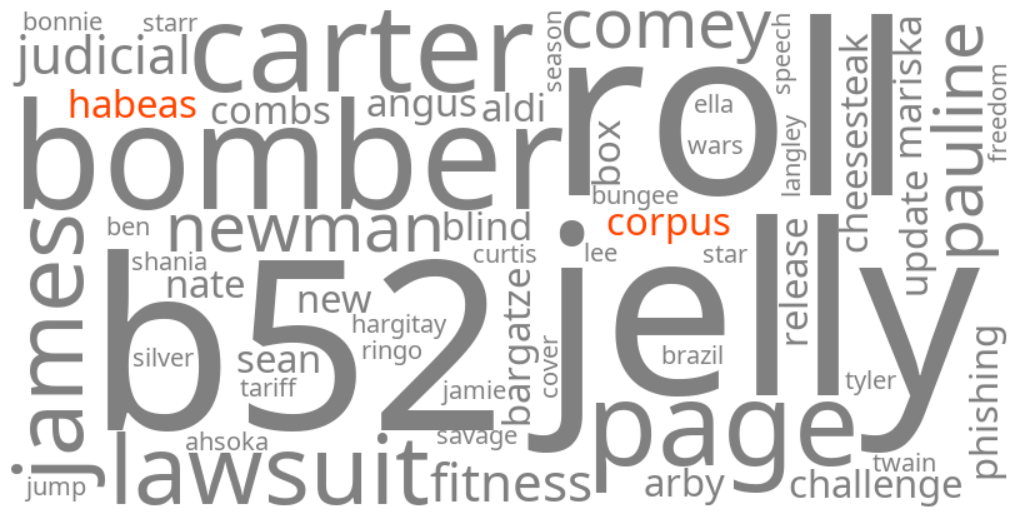
 Law and Government
habeas corpus
Summary (tl;dr)
"Habeas corpus" is trending because the Trump administration reportedly considered suspending this fundamental right, a legal safeguard against unlawful detention, amidst increased efforts for mass deportations. This has led to a surge in legal challenges from immigrants and public debate over its importance.
Essential Background
Habeas corpus, Latin for "you have the body," is a centuries-old legal principle originating from the Magna Carta, enshrined in the U.S. Constitution, that protects individuals from unlawful detention by requiring the government to bring a detainee before a judge to justify their imprisonment. It serves as a critical check on government power, ensuring due process and safeguarding individual liberty for both citizens and non-citizens. Historically, the U.S. has suspended habeas corpus only in rare circumstances like the Civil War and World War II, usually with congressional authorization.
The Full Story
"Habeas corpus" is currently trending due to recent reports that officials in the Trump administration, particularly former White House Deputy Chief of Staff Stephen Miller, explored suspending this constitutional right, especially in the context of mass deportation initiatives. A confidential memo from April 29, 2025, reportedly drafted by White House staff secretary Will Scharf, warned against suspending habeas corpus, citing significant legal concerns and the likelihood of major legal battles. This discussion follows President Trump's invocation of the Alien Enemies Act of 1798 to rapidly remove certain noncitizens, a move that has faced numerous lawsuits and judicial challenges reaffirming the right to habeas corpus for those detained.
Adding to the trend, Department of Homeland Security Secretary Kristi Noem incorrectly defined habeas corpus during a Senate hearing on May 22, 2025, stating it was the "right that the president has to be able to remove people from this country," further fueling public discussion and concern over the administration's understanding and respect for constitutional protections. There has also been a historic surge in habeas corpus petitions filed by immigrants challenging their detentions, overwhelming federal courts across the country, particularly in states with high immigration enforcement activity.
Why It Matters
The discussion around suspending habeas corpus is significant because it touches upon one of the most fundamental protections against arbitrary government power, distinguishing free societies from authoritarian states. Any attempt to suspend it, especially without congressional approval, would likely face immense legal challenges and could set a dangerous precedent for civil liberties. The surge in habeas corpus petitions highlights concerns over the legality of current immigration detention practices and the potential for government overreach. Critics argue that undermining this right could lead to indefinite detention without charge, imprisonment without fair hearings, and increased government abuse of power. The debate underscores the ongoing tension between executive enforcement priorities and constitutional safeguards for individual rights.
Geographic Location
- White House, Washington, D.C., District of Columbia, United States (discussions and internal memo regarding suspension of habeas corpus)
- Washington, D.C., District of Columbia, United States (Senate hearing where DHS Secretary Kristi Noem testified)
- California, United States (high volume of habeas corpus petitions)
- Texas, United States (high volume of habeas corpus petitions)
- Minnesota, United States (surge in immigration crackdown cases; location of court orders in cases like Alberto Castaneda Mondragon)
- El Salvador (destination for some deportations under the Alien Enemies Act, challenged via habeas corpus)