 Business and Finance
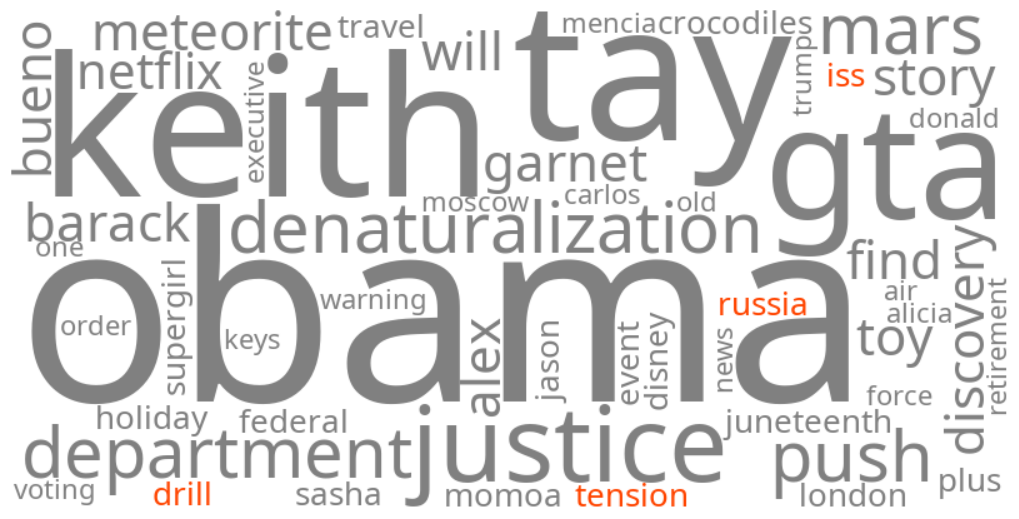
iss russia drill tension
Summary (tl;dr)
Tension has escalated on the International Space Station (ISS) after a persistent air leak in the Russian Zvezda module led to a standoff between NASA and Roscosmos over proposed repair methods, prompting NASA to order its astronauts to take emergency shelter.
Essential Background
The International Space Station is a collaborative project involving multiple nations, primarily the United States and Russia, symbolizing decades of international cooperation in space despite geopolitical tensions on Earth. This partnership, established in 1993, brought together concepts from NASA's Freedom and Russia's Mir-2 stations, leading to the 1998 Space Station Intergovernmental Agreement. While the ISS has largely been a success, its history has seen ongoing challenges, including funding issues, technical disagreements, and political rivalries between the primary operators. Russia has committed to ISS operations until at least 2028, with the U.S. and other partners extending their commitment until 2030. There have been previous instances of air leaks on the ISS, with one notable incident in 2018 in a Soyuz spacecraft potentially linked to a drilling mishap on Earth during assembly.
The Full Story
A long-standing air leak in the PrK tunnel, a section connecting the Russian Zvezda module to an aft docking port on the International Space Station, has recently worsened, causing a significant increase in the rate of air loss. On June 5, 2026, the disagreement between NASA and Russia's space agency, Roscosmos, regarding repair methods reached a critical point. Roscosmos proposed using drastic measures, including a handsaw and a drill, to modify the module in an attempt to fix the leak. NASA vehemently opposed this plan, fearing that cutting a load-bearing bracket could lead to a "bad outcome" or structural failure.
In response to these concerns and Roscosmos's intent to proceed, NASA directed its four SpaceX Crew-12 astronauts and NASA astronaut Chris Williams to take a "safe haven" position inside their docked Dragon capsule, ready for potential evacuation. This move was described by a NASA official as a way to "send a message to the world that we disagreed." Although Roscosmos initially maintained the situation was under control and one leak had been plugged, the agency eventually abandoned the risky drilling and cutting plan, and NASA's personnel were able to resume normal duties. This tense standoff highlighted deep coordination issues between the two space agencies.
Why It Matters
This incident underscores the inherent risks and complexities of operating an aging International Space Station and the challenges of international cooperation in space, particularly amidst terrestrial geopolitical tensions. The dispute jeopardized astronaut safety and the operational integrity of the ISS, forcing emergency protocols that could have led to a partial evacuation. The persistent leaks and the contentious repair attempts also bring into focus the urgency for NASA to decide by 2027 whether to extend the ISS beyond 2030 or transition to commercial space stations, as the leak highlights the increasing challenges of maintaining the existing infrastructure. The event also demonstrates how communication breakdowns and differing operational philosophies between space agencies can escalate into critical situations, despite a shared goal of space exploration.
Geographic Location
- International Space Station, Low Earth Orbit (site of air leak and repair attempts)
- Mission Control Center – Houston, Texas, United States (NASA's direction of astronauts and concern over repairs)
- Mission Control Center – Moscow, Moscow Oblast, Russia (Roscosmos's proposal of repair methods and direction of cosmonauts)