 Law and Government
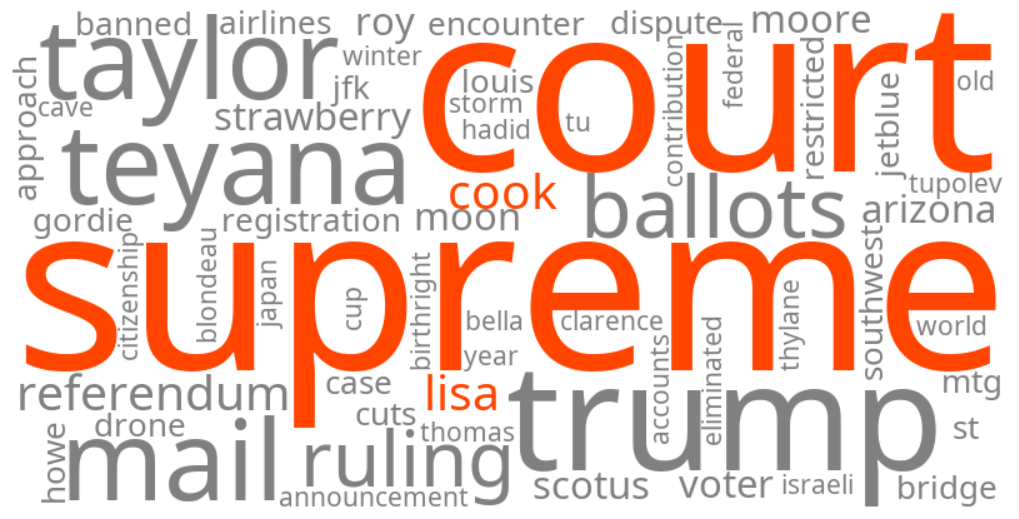
lisa cook supreme court
Summary (tl;dr)
The Supreme Court delivered two landmark decisions today regarding presidential power over independent agencies, broadly expanding the President's ability to remove heads of most such bodies while specifically upholding the independence of the Federal Reserve by blocking the immediate firing of Governor Lisa Cook.
Essential Background
Independent federal agencies, such as the Federal Trade Commission (FTC) and the Federal Reserve, were established to operate with a degree of autonomy from direct political pressure. This independence was historically reinforced by "for cause" removal provisions, meaning agency heads could only be dismissed for specific reasons like inefficiency or misconduct. The 1935 Supreme Court case Humphrey's Executor v. United States notably upheld these protections for certain agencies. The Federal Reserve, as the nation's central bank, is particularly designed to be insulated from political influence to ensure stable economic policy.
The Full Story
On June 29, 2026, the Supreme Court of the United States issued two highly anticipated and consequential rulings concerning presidential removal power. In the case of Trump v. Slaughter, the Court, in a 6-3 decision, significantly expanded presidential authority by declaring unconstitutional the "for cause" removal protections for members of the Federal Trade Commission (FTC). This ruling overturns a nearly 90-year-old precedent and now allows the President to fire leaders of many independent federal agencies at will. The case originated from President Donald Trump's firing of former FTC Commissioner Rebecca Slaughter in March 2025, which he stated was due to her service being "inconsistent" with his administration's priorities.
However, on the same day, the Court issued a contrasting 5-4 decision in Trump v. Cook, blocking President Trump's immediate attempt to fire Federal Reserve Governor Lisa Cook. Cook, a Biden appointee, was targeted by President Trump over allegations of mortgage fraud. The Court ruled that while a President can remove a Federal Reserve Governor for "cause," such removal requires that the official be afforded proper procedural protections, including an opportunity to respond to the allegations, which were not provided in Cook's case. This decision allows Cook to remain in her position for now and is seen as a preservation of the Federal Reserve's vital independence.
Why It Matters
These rulings carry profound implications for the structure and functioning of the U.S. government. The Trump v. Slaughter decision represents a significant shift in the balance of power, granting the President greater control over independent agencies and potentially leading to increased political influence over their regulatory and enforcement functions. This could result in agency policies more closely aligning with a President's agenda, but also raises concerns about reduced insulation from political pressures. Conversely, the Trump v. Cook decision reaffirms the distinct and protected status of the Federal Reserve, underscoring its crucial role in maintaining economic stability free from direct political interference in areas such as interest rate decisions. The contrasting outcomes highlight the Supreme Court's nuanced approach to the independence of various federal bodies.
Geographic Location
- Supreme Court Building, Washington, D.C., District of Columbia, United States (issuance of rulings in Trump v. Slaughter and Trump v. Cook)
- Washington, D.C., District of Columbia, United States (location of the Federal Trade Commission and Federal Reserve Board of Governors, agencies affected by the rulings)