 Law and Government
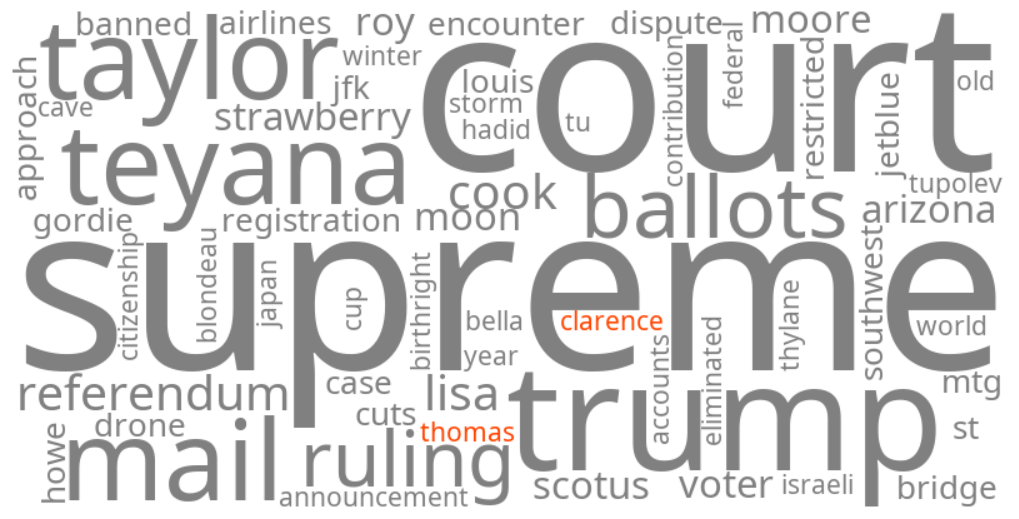
clarence thomas
Summary (tl;dr)
The Supreme Court declined to hear Alan Dershowitz's $300 million defamation lawsuit against CNN, while Justices Clarence Thomas and Neil Gorsuch dissented, signaling their continued interest in reconsidering the landmark "actual malice" standard for libel cases.
Essential Background
In 1964, the Supreme Court established the "actual malice" standard in New York Times v. Sullivan, requiring public figures to prove that a defamatory statement was made with knowledge of its falsity or with reckless disregard for the truth to win a libel lawsuit. This standard significantly protects press freedom. Alan Dershowitz, a prominent attorney and retired Harvard Law School professor, served on President Donald Trump's legal team during his 2020 impeachment trial.
The Full Story
On Monday, June 29, 2026, the U.S. Supreme Court refused to revive a $300 million defamation lawsuit filed by Alan Dershowitz against CNN. Dershowitz alleged that CNN's coverage of his remarks during President Trump's first impeachment trial in 2020 distorted his arguments, making it appear as if he had "lost his mind." Lower federal courts, including a district court in Florida and the 11th Circuit Court of Appeals in Atlanta, had previously ruled in favor of CNN, finding that Dershowitz failed to provide evidence of "actual malice" on the part of the network. Justices Clarence Thomas and Neil Gorsuch dissented from the Supreme Court's decision not to hear the case, reiterating their view that the Court should reconsider or overturn the New York Times v. Sullivan precedent. They argue that the "actual malice" standard "bears no relation to the text, history, or structure of the Constitution."
Why It Matters
This decision reinforces the high legal bar for public figures seeking to win defamation lawsuits against media organizations, upholding the "actual malice" standard established in New York Times v. Sullivan. The dissent by Justices Thomas and Gorsuch highlights an ongoing debate within the Supreme Court regarding the scope of press freedom and the protections afforded to journalists when reporting on public figures. Critics of the "actual malice" standard argue it makes it too difficult for public figures to seek redress for false statements, while its defenders contend it is crucial for protecting investigative journalism and the free exchange of information, preventing a "chilling effect" on speech. If the Sullivan precedent were to be overturned or significantly weakened, it could make it considerably easier for public figures to sue media outlets for defamation, potentially impacting how the press reports on public officials and events.
Geographic Location
- Washington, D.C., District of Columbia, United States (Supreme Court refused to hear Alan Dershowitz's defamation suit)
- Atlanta, Fulton County, Georgia, United States (11th Circuit Court of Appeals affirmed lower court's ruling in favor of CNN)
- Fort Lauderdale, Broward County, Florida, United States (Federal district court ruled in favor of CNN in 2023)
- Washington, D.C., District of Columbia, United States (President Donald Trump's first impeachment trial in the Senate, where Dershowitz made the contested remarks in 2020)
- Montgomery, Montgomery County, Alabama, United States (Location central to the New York Times v. Sullivan case in 1964)