 Law and Government
camera
Summary (tl;dr)
Recent fatal police shootings have intensified public demand for transparency and the release of police body camera footage, while ongoing legislative debates address the broader scope of government surveillance and data privacy in the digital age.
Essential Background
The integration of cameras into law enforcement and public spaces has brought both promises of accountability and concerns over privacy. Body-worn cameras (BWCs) were widely adopted by police departments to provide objective records of encounters, yet disputes often arise when footage is withheld or contradicts official statements. Simultaneously, the proliferation of surveillance technologies, including advanced AI-powered systems and automatic license plate readers (ALPRs), alongside federal intelligence programs, has sparked significant debate among civil liberties advocates and the public regarding the extent of government data collection and its impact on individual rights.
The Full Story
Public demand for transparency from law enforcement has surged in early July 2026, following two high-profile police shootings. In Wilmington, Delaware, an attorney representing the family of a teen shot by police claims body camera footage contradicts police accounts, suggesting the teen was shot while fleeing, prompting calls for the footage's full public release. Concurrently, in Senatobia, Mississippi, the family of a one-year-old child killed during a police shooting is urgently demanding access to police body camera, dashcam, and Walmart surveillance video to clarify the incident. These events highlight a national focus on police accountability, underscored by an independent audit in Alexandria, Virginia, which revealed officers improperly muted body cameras prior to a death in custody. Separately, a Massachusetts court recently upheld the use of bodycam footage in a sobriety test case, ruling troopers did not violate wiretap laws due to visible cameras and warning signs.
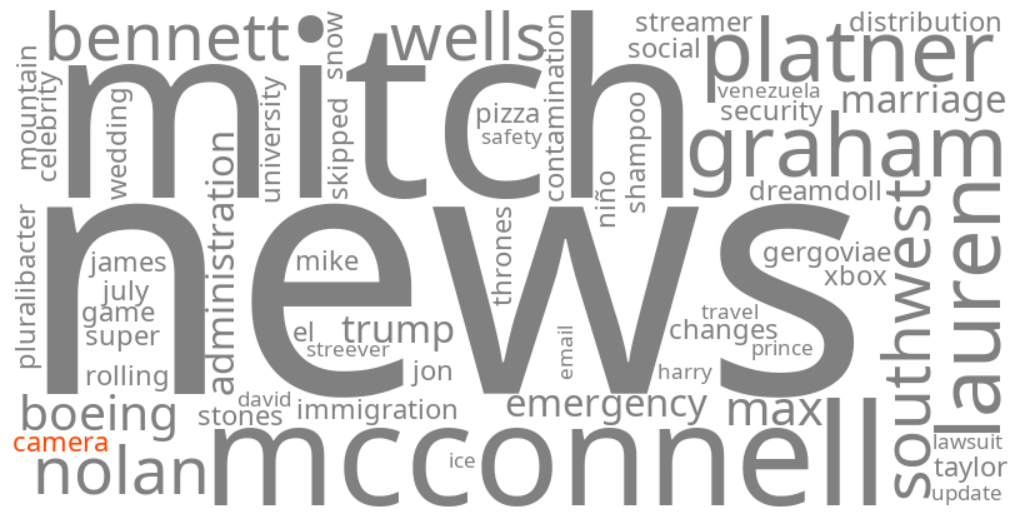
On the legislative front, Congress is in an ongoing debate over the renewal of Section 702 of the Foreign Intelligence Surveillance Act (FISA), a controversial program enabling warrantless surveillance of foreign targets that often incidentally collects data from U.S. citizens. Various bipartisan bills, such as the "Government Surveillance Reform Act," aim to implement warrant requirements for accessing Americans' data gathered under this authority. At the state level, Washington introduced "The Law Enforcement Body Worn Camera Act" to mandate statewide body camera standards and free public access to recordings, while Congresswoman Rashida Tlaib introduced the "Stop Body Camera Paywalls Act" to prevent local governments from charging fees for body camera footage. Additionally, California has seen the introduction of several acts, including the "CA Location Privacy Act," to modernize privacy laws and restrict the sale of sensitive personal information. The recent implementation of a new Virginia law allowing AI traffic cameras in school zones, despite privacy concerns, further illustrates the expanding scope of camera technology in governance. The increased public interest in "camera" within the "Law and Government" category reflects these intersecting concerns about accountability, privacy, and the evolving role of surveillance technology in society.
Why It Matters
These trending keywords signify a critical moment in balancing public safety, law enforcement accountability, and individual privacy rights. The outcomes of investigations into recent police shootings and the legislative discussions surrounding surveillance powers will profoundly impact civil liberties and police-community relations. Ensuring transparent access to camera footage can build trust and provide crucial evidence, while establishing clear legal frameworks for broader surveillance is essential to prevent potential abuses and protect constitutional rights in an increasingly monitored world. These ongoing developments are shaping the future intersection of technology, justice, and governance.
Geographic Location
- Wilmington, New Castle County, Delaware, United States (police shooting incident and calls for body camera footage release)
- Senatobia, Tate County, Mississippi, United States (fatal police shooting of a baby and family's demand for camera footage)
- Alexandria, Virginia, United States (audit found officers improperly muted body cameras; police released bodycam footage from another fatal incident)
- Washington, D.C., District of Columbia, United States (site of federal legislative debates on FISA Section 702 and various police body camera bills, including the passage of the FAAR Act)
- Olympia, Thurston County, Washington, United States (introduction of "The Law Enforcement Body Worn Camera Act")
- Boston, Suffolk County, Massachusetts, United States (court reversed suppression of bodycam footage in OUI case)
- Virginia, United States (new law allowing AI traffic cameras starting July 1)
- California, United States (introduction of several privacy acts like CA Location Privacy Act, CA Data Privacy Act)