 Law and Government
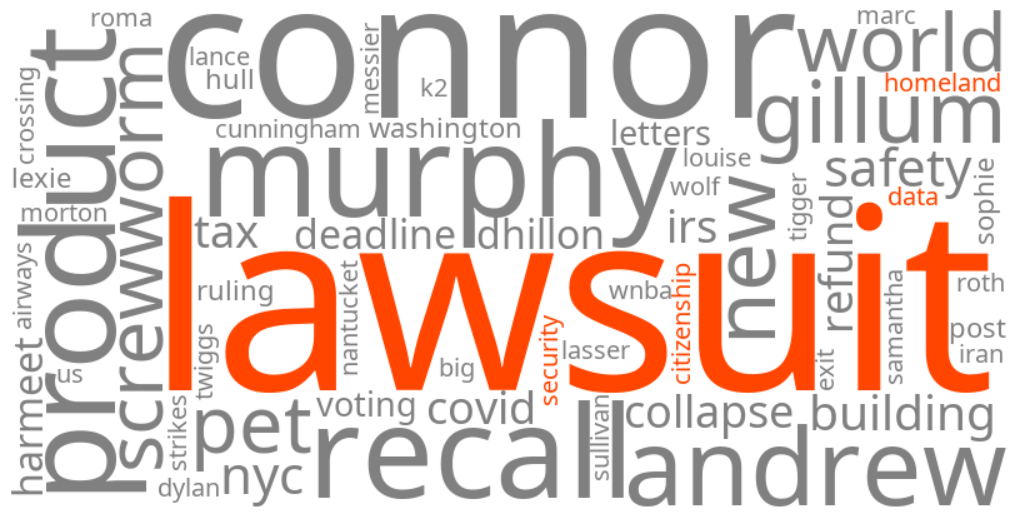
homeland security citizenship data lawsuit
Summary (tl;dr)
A legal battle is escalating over the Department of Homeland Security's (DHS) expanded use of a citizenship data database, intended for identifying non-citizens on voter rolls, following conflicting federal court rulings.
Essential Background
Historically, the U.S. Citizenship and Immigration Services (USCIS), a component of DHS, maintained the Systematic Alien Verification for Entitlements (SAVE) database to help government agencies verify the immigration and citizenship status of individuals for benefit eligibility. This system primarily contained information on immigrants and was not designed to confirm the citizenship of U.S.-born citizens. In March 2025, an executive order under the Trump administration directed DHS to expand the SAVE system by incorporating data from the Social Security Administration (SSA) to create a broader national citizenship database, with the explicit aim of assisting states in checking voter registration rolls for non-citizens. This expansion has been met with significant legal challenges and concerns from voting rights and privacy advocacy groups.
The Full Story
The trending keywords stem from an ongoing legal conflict surrounding the Department of Homeland Security's consolidation and distribution of federal citizenship data for potential voter purges. On June 22, 2026, a federal judge in Washington, D.C., Judge Sparkle L. Sooknanan, ruled that the Trump administration's overhaul of the SAVE system to create a national citizenship database was unlawful. The judge found that the government "knowingly trampled on the privacy rights of American citizens" and violated the Privacy Act of 1974, the Administrative Procedure Act, and the Social Security Act, ordering a halt to the data consolidation efforts.
However, in a conflicting decision issued on July 7, 2026, a federal judge in Florida, Judge T. Kent Wetherwell II, ordered DHS to reinstate access to the expanded SAVE system's bulk-upload and Social Security number search features for four Republican-led states: Florida, Indiana, Ohio, and Iowa. This ruling was in response to a petition from these states to enforce a November 2025 settlement agreement with DHS, which granted them access to the expanded database for voter roll checks. This creates a direct contradiction between federal court orders, setting the stage for further legal entanglement. Advocacy groups like the League of Women Voters and the Electronic Privacy Information Center (EPIC) have filed lawsuits, arguing that the consolidated database contains unreliable information that could lead to the erroneous disenfranchisement of eligible voters.
Why It Matters
This trend is significant due to its implications for voting rights, individual privacy, and the balance of power between federal agencies and states. Critics argue that the consolidation of sensitive personal data from various agencies, especially the inclusion of Social Security Administration data which is not designed for citizenship verification, is prone to errors and could lead to eligible citizens being wrongly removed from voter rolls. There are concerns about the privacy and security of this centralized database, as well as the potential for it to be misused for purposes beyond voter verification, such as immigration enforcement or surveillance. Furthermore, the conflicting federal court decisions create legal uncertainty and highlight a broader debate over federal intervention in election administration, which historically has been primarily a state responsibility. The lawsuits also raise fundamental questions about government overreach and the protection of constitutional rights, including the Fourth Amendment and the right to vote.
Geographic Location
- Washington, D.C., District of Columbia, United States (federal judge blocked DHS citizenship database)
- U.S. District Court for the District of Columbia, Washington, D.C., District of Columbia, United States (location of court ruling against DHS database)
- Florida, United States (federal judge allowed certain states to use DHS citizenship database)
- Florida, United States (state involved in lawsuit seeking access to DHS database)
- Indiana, United States (state involved in lawsuit seeking access to DHS database)
- Ohio, United States (state involved in lawsuit seeking access to DHS database)
- Iowa, United States (state involved in lawsuit seeking access to DHS database)