 Law and Government
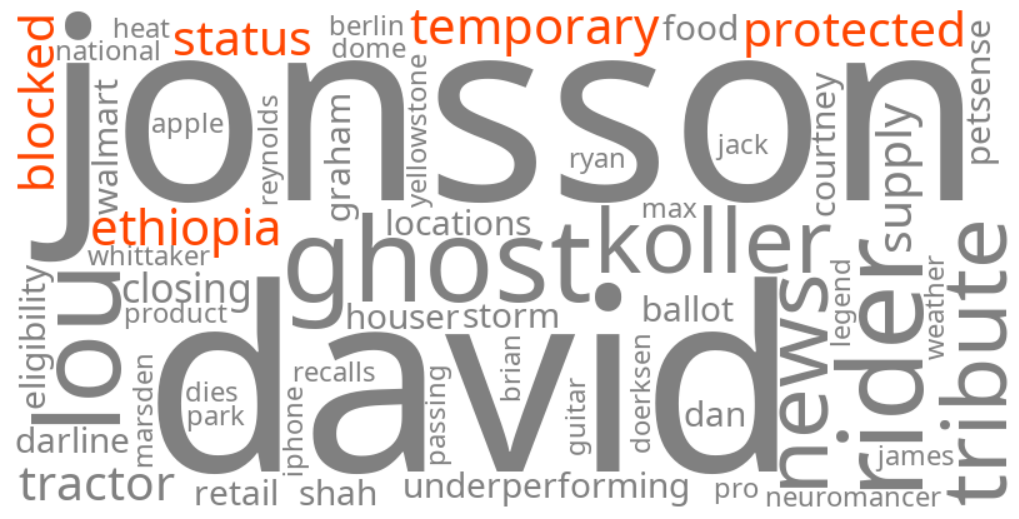
ethiopia temporary protected status blocked
Summary (tl;dr)
A federal judge has temporarily blocked the U.S. government's attempt to terminate Temporary Protected Status (TPS) for Ethiopian nationals, despite a recent Supreme Court ruling that limited judicial review of such decisions.
Essential Background
The U.S. government initially granted Temporary Protected Status (TPS) to Ethiopia in 2022 due to ongoing armed conflict, widespread violence, human rights abuses, and a severe humanitarian crisis in the country, making it unsafe for Ethiopian nationals to return. This designation allowed eligible Ethiopians to live and work legally in the United States, and the status was extended in April 2024. However, in December 2025, the Trump administration, through then-Department of Homeland Security (DHS) Secretary Kristi Noem, announced the termination of Ethiopia's TPS designation, asserting that the country's conditions no longer met the statutory requirements for the status. The termination was scheduled to take effect on February 13, 2026.
The Full Story
The keywords are trending because a federal judge has again intervened to prevent the termination of Temporary Protected Status (TPS) for thousands of Ethiopian nationals in the United States. On July 25, 2026, Judge Brian Murphy of the U.S. District Court for the District of Massachusetts issued an administrative stay, temporarily blocking the Trump administration's termination of Ethiopia's TPS designation. This decision follows a lawsuit filed in January 2026 by African Communities Together (ACT) and Ethiopian TPS holders, challenging the DHS termination decision, arguing it was procedurally flawed and ignored unsafe conditions in Ethiopia. While the District Court initially granted a postponement of the termination in January and April 2026, a recent Supreme Court ruling on June 25, 2026, in Mullin v. Doe, significantly narrowed the authority of lower courts to block DHS decisions regarding TPS terminations. Despite this Supreme Court precedent, Judge Murphy's latest order aims to preserve protections for Ethiopian nationals while the court evaluates whether constitutional claims can still be pursued. DHS has expressed strong disagreement with such judicial interventions, viewing them as attempts to undermine the Supreme Court's decision.
Why It Matters
This ongoing legal battle is critical for approximately 26,700 Ethiopian nationals in the United States who could lose their protected status, work authorization, and face potential deportation if TPS is terminated. For many, this means being forced to return to a country still experiencing armed conflict, widespread displacement, and severe food insecurity. The trend highlights the complex interplay between executive branch immigration policy, judicial review, and humanitarian concerns, particularly in light of the Supreme Court's recent decision limiting judicial oversight of TPS determinations. The outcome will set an important precedent for future TPS designations and terminations, impacting immigrants from various countries.
Geographic Location
- Boston, Suffolk County, Massachusetts, United States (federal lawsuit challenging TPS termination filed; U.S. District Court for the District of Massachusetts issued administrative stays and postponement of TPS termination)
- Washington, D.C., District of Columbia, United States (U.S. Supreme Court ruling in Mullin v. Doe regarding TPS judicial review)
- Ethiopia (country conditions leading to TPS designation; ongoing armed conflict and humanitarian crisis)