 Climate
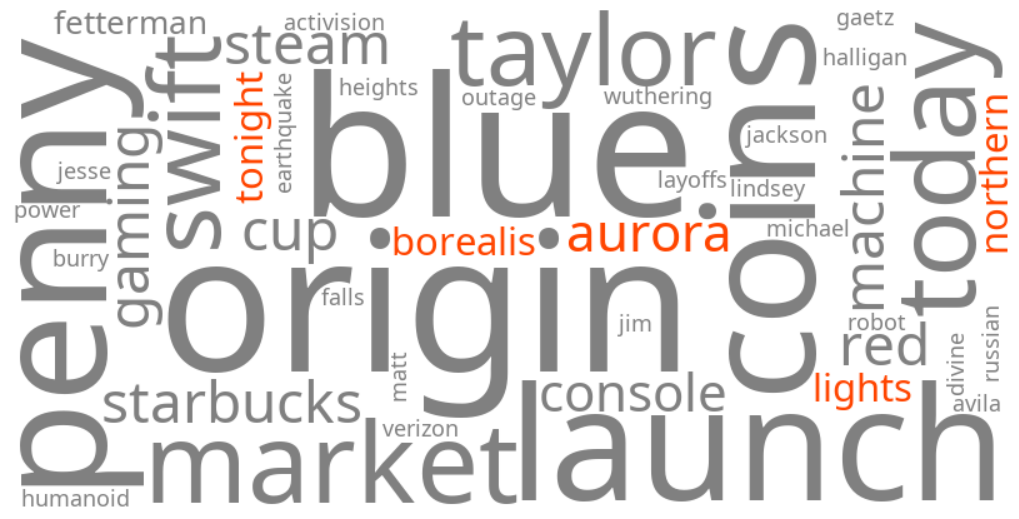
aurora borealis northern lights tonight
Summary (tl;dr)
Google searches for "aurora borealis northern lights tonight" are surging due to a severe geomagnetic storm impacting Earth, making the aurora potentially visible much further south than usual across various regions, including much of the United States and the UK.
Essential Background
The aurora borealis, also known as the Northern Lights, is a natural light display in Earth's sky, predominantly seen in high-latitude regions. It occurs when energized particles from the sun, typically carried by solar winds, collide with atoms and molecules in Earth's upper atmosphere, causing them to emit light. These events are often linked to solar flares and coronal mass ejections (CMEs), which are powerful bursts of radiation and plasma from the sun.
The Full Story
A series of intense solar flares and coronal mass ejections (CMEs) from the sun, particularly on November 11, 2025, have led to a severe (G4) geomagnetic storm impacting Earth, with some observations even reaching a G5 (extreme) level. This significant space weather event has resulted in ongoing strong (G3) to moderate (G2) geomagnetic storm conditions through November 13, 2025. As a consequence, the Northern Lights are currently expected to be visible tonight in many areas beyond their typical polar ranges. Forecasters from the National Oceanic and Atmospheric Administration (NOAA) Space Weather Prediction Center and the British Geological Survey have indicated that the aurora borealis could be seen as far south as Alabama and Northern California in the US, and across much of the UK. The best viewing times are typically from just after sunset until around 1:00 AM local time, assuming clear, dark skies.
Why It Matters
The widespread visibility of the aurora borealis is generating immense public interest, prompting people to search for information on when and where to best observe this usually elusive phenomenon. Beyond the captivating sky displays, these severe geomagnetic storms can also pose risks to technology, including potential disruptions to satellite operations, power grids, and GPS navigation systems. Authorities like NOAA and the European Space Agency are actively monitoring the situation to assess any impacts on critical infrastructure.