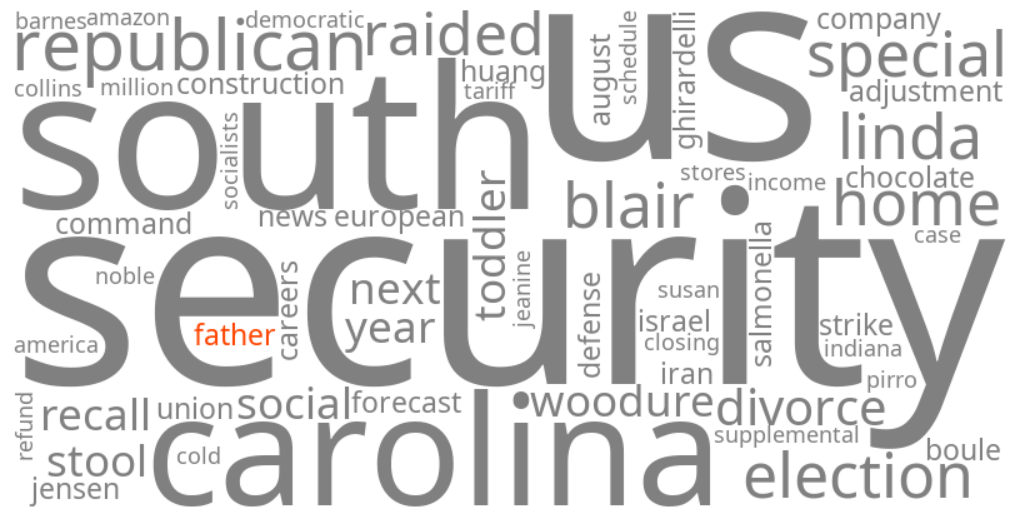
 Law and Government
father
Summary (tl;dr)
Keywords related to "father" are trending under "Law and Government" due to significant legal shifts expanding fathers' rights in child custody and paternity, the ongoing development of paternity leave legislation, and debates surrounding gender-neutral language in legal terminology.
Essential Background
Historically, legal frameworks concerning parental rights, particularly for unmarried parents, often placed mothers in a more advantageous position regarding custody and decision-making. Federal family leave policies, like the FMLA, have typically offered unpaid leave, leading to a patchwork of benefits for fathers across different states and employers. Traditional legal language has also predominantly used gender-specific terms like "mother" and "father."
The Full Story
The legal landscape is undergoing considerable transformation, with recent legislative efforts focusing on enhancing fathers' rights and roles within the family. Several states are enacting laws that grant fathers, particularly unmarried fathers, more equitable parental rights and responsibilities. For instance, Florida's "Good Dad Act," effective July 1, 2023, has significantly streamlined the process for unmarried fathers to establish paternity and gain equal guardianship, moving towards co-parenting and shared decision-making models. Similarly, Georgia's child custody laws now explicitly prohibit gender-based favoritism, emphasizing the child's best interests through shared custody arrangements.
Concurrently, the expansion of paternity leave is a growing trend across the United States. While the federal Family and Medical Leave Act (FMLA) provides up to 12 weeks of unpaid, job-protected leave, many states are actively rolling out or expanding paid family and medical leave programs to enable fathers to bond with new children. States like Delaware and Minnesota began implementing such benefits in early 2026, with Maine slated to follow later in the year.
In a separate but related development, some legislative bodies are considering changes to legal terminology. In New York, for example, a proposed law could replace "mother" with "gestating parent" and "father" with "non-gestating parent" in legal documents to promote gender inclusivity. Furthermore, new regulations, such as Illinois's Children's Social Media Safety Act, are addressing parental oversight in the digital realm, allowing parents to control how social media platforms interact with their minor children.
Why It Matters
These trends signify a crucial societal shift towards recognizing and valuing a father's active and equal involvement in a child's upbringing. Expanded legal rights for fathers can lead to more balanced parenting arrangements, potentially fostering stronger parent-child relationships and better developmental outcomes for children. The push for paid paternity leave highlights a growing understanding of the importance of early parental bonding and support for working families. Meanwhile, the debate over gender-neutral terminology reflects broader discussions about inclusivity and modernizing legal language to accommodate diverse family structures, ensuring laws are reflective of all parents.
Geographic Location
- Florida, United States (enactment of "Good Dad Act" expanding fathers' rights)
- Georgia, United States (reforms in child custody laws emphasizing shared parenting for fathers)
- New York, United States (proposed legislation for gender-neutral parental terminology)
- Illinois, United States (enactment of Children's Social Media Safety Act impacting parental control)
- Delaware, United States (rolling out paid family and medical leave programs)
- Minnesota, United States (rolling out paid family and medical leave programs)
- Maine, United States (planning to roll out paid family and medical leave programs mid-year 2026)