 Law and Government
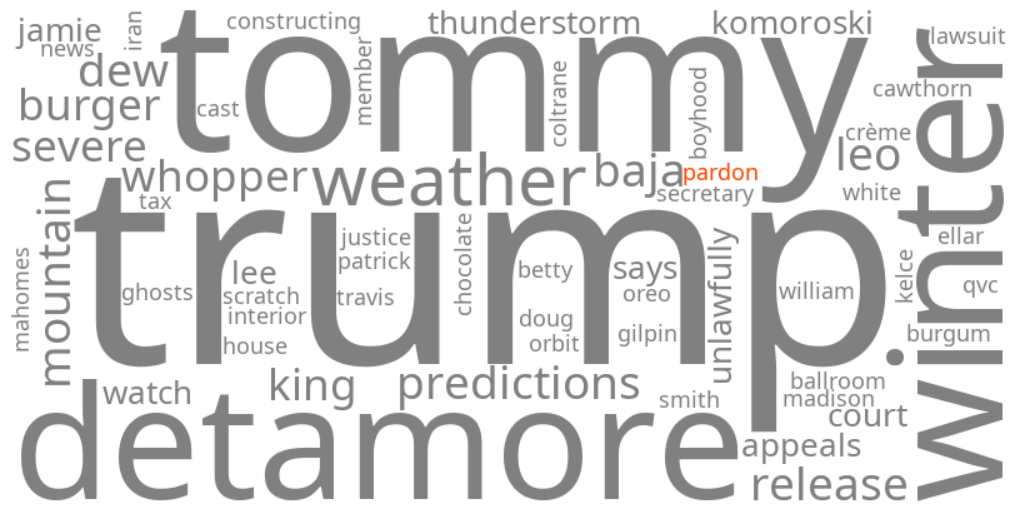
pardon
Summary (tl;dr)
Presidential pardons are trending due to recent clemency actions by President Donald Trump for various federal crimes, coupled with a significant legal and political debate surrounding a contempt finding against Dr. Anthony Fauci, where the scope of his presidential pardon is a central issue.
Essential Background
The power to grant pardons for offenses against the United States is a constitutional authority vested in the President by Article II, Section 2 of the U.S. Constitution. This power of executive clemency allows the President to offer forgiveness for federal crimes, typically restoring certain rights and removing penalties. Historically, presidents have utilized this power for various reasons, including recognizing rehabilitation, correcting perceived injustices, or as a matter of policy. In recent years, the exercise of presidential pardon power has become a frequent subject of public and political debate, particularly concerning its timing, beneficiaries, and potential motivations. Donald Trump notably issued numerous pardons in his first term, a pattern that has continued and intensified in his second term, which began in January 2025.
The Full Story
"Pardon" is currently a trending keyword, driven by recent high-profile clemency grants by President Donald Trump and an ongoing legal and political dispute involving Dr. Anthony Fauci. On July 3, 2026, President Trump issued pardons to 11 individuals, including Adam Kidan, a former business partner involved in a past lobbying scandal, and nine individuals convicted of Clean Air Act violations for tampering with vehicle emissions controls. These actions are part of a broader trend in Trump's second term, during which he has granted executive clemency to over 1,700 individuals as of June 2026, frequently for white-collar crimes, and has been criticized for potentially nullifying billions in restitution and fines owed to victims. His pardons have also notably included a blanket pardon for approximately 1,500 individuals associated with the January 6 Capitol attack and 77 individuals linked to the 2020 "fake electors" plot. The timing of some pardons, such as Kidan's, has drawn scrutiny due to its proximity to political donations.
Concurrently, the concept of a presidential pardon is central to a significant legal and political controversy surrounding Dr. Anthony Fauci. On August 6, 2026, the Senate Homeland Security Committee voted to hold Dr. Fauci in contempt of Congress after he invoked the Fifth Amendment numerous times during testimony concerning the COVID-19 pandemic. The committee argued that a broad preemptive pardon granted to Fauci by President Biden, covering his actions from January 2014 to January 2025, should have nullified his privilege against self-incrimination. However, Fauci's legal team asserts that this pardon does not cover actions taken after January 2025, nor does it shield him from potential state or local prosecutions, thereby raising complex constitutional questions regarding the precise scope and limitations of presidential pardons.
Furthermore, gubernatorial pardon actions are also contributing to the trend. California Governor Gavin Newsom granted several pardons and commutations in early 2026, emphasizing rehabilitation. Wisconsin Governor Tony Evers has also been noted for reinstating the state's commutation process and issuing a record number of pardons. In Kentucky, a proposed constitutional amendment aimed at limiting the governor's pardon power around elections will appear on the ballot in November 2026, a measure sparked by a past clemency controversy. Internationally, Trinidad and Tobago also saw 17 individuals receive presidential pardons on July 30, 2026.
Why It Matters
The trending nature of "pardon" underscores persistent national conversations about the authority and integrity of executive clemency powers at both federal and state levels. President Trump's extensive use of pardons, especially for individuals connected to financial crimes or politically charged events like the January 6 Capitol attack and the "fake electors" scheme, ignites debates over accountability, potential political favoritism, and the undermining of judicial outcomes and environmental protections, such as the Clean Air Act.
The Dr. Fauci case holds particular significance as it tests the boundaries of a presidential pardon's ability to protect an individual from congressional oversight and the constitutional right against self-incrimination. This legal battle presents profound implications for future governmental accountability and the balance of power among branches of government. Meanwhile, state-level discussions, such as the Kentucky ballot initiative, reflect broader public concerns about defining and potentially restricting executive clemency powers to prevent perceived abuses. These converging events highlight the enduring importance of pardons in the legal and political landscape.
Geographic Location
- Washington, D.C., District of Columbia, United States (President Donald Trump issued federal pardons from the White House; the Senate Homeland Security Committee held Dr. Anthony Fauci in contempt)
- Sacramento, Sacramento County, California, United States (Governor Gavin Newsom announced clemency actions)
- Madison, Dane County, Wisconsin, United States (Governor Tony Evers restored the commutation process and issued pardons)
- Frankfort, Franklin County, Kentucky, United States (site of a legislatively referred constitutional amendment on gubernatorial pardon power)
- Port-of-Spain, Trinidad and Tobago (17 people received Presidential Pardons from the Ministry of Justice headquarters)