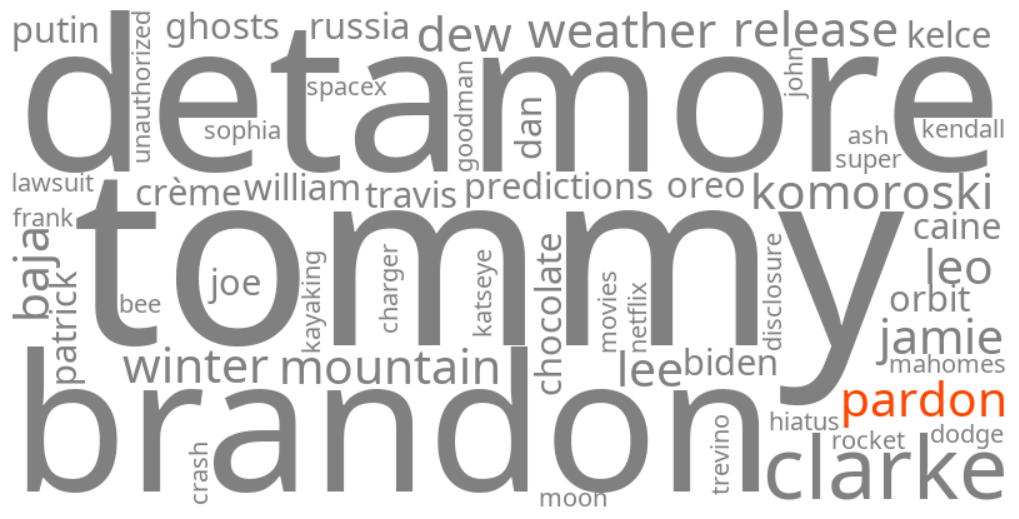
 Law and Government
pardon
Summary (tl;dr)
The concept of "pardon" is trending due to multiple recent high-profile clemency actions and related controversies, including President Trump's pardons of political allies and individuals linked to environmental violations, discussions surrounding Hunter Biden's past pardon, and Dr. Anthony Fauci's invocation of the Fifth Amendment despite a prior pardon.
Essential Background
The U.S. Constitution grants the President the power to grant pardons for federal offenses, a broad executive authority that can erase convictions or commute sentences. Historically, presidential pardons have often been controversial, particularly when perceived as politically motivated or benefiting those with close ties to the administration. Former President Joe Biden issued a full pardon to his son, Hunter Biden, in December 2024, amidst ongoing legal scrutiny. Additionally, former President Biden issued a preemptive pardon to Dr. Anthony Fauci covering his actions during a specific period of his government service. President Donald Trump, during both his first and second terms, has demonstrated a pattern of granting clemency to political allies, major donors, and individuals he views as unjustly targeted.
The Full Story
"Pardon" is trending due to several interconnected events in July and August 2026. On July 3, 2026, President Donald Trump issued pardons to 11 individuals, including nine convicted of violating the federal Clean Air Act by tampering with vehicle emissions controls. Among those pardoned were Adam Kidan, a significant Republican donor and former business partner in a corruption scandal, and Jack Harvard, a former mayor convicted of bank fraud. These actions continue President Trump's pattern of granting clemency to political allies and those convicted of white-collar crimes or specific federal regulations.
Adding to the trend, Hunter Biden recently commented on the full and unconditional pardon he received from his father in December 2024, stating in an interview with the BBC that while he was privileged to receive it, the decision was "not good" for America or his father's legacy.
Furthermore, Dr. Anthony Fauci made headlines in early August after a Senate committee voted to hold him in contempt of Congress. Fauci invoked the Fifth Amendment more than 100 times during a July 29 hearing concerning the COVID-19 pandemic, despite having received a broad preemptive pardon from former President Biden covering his federal government service from January 2014 to January 2025. This has sparked debate over whether a pardon negates the right to self-incrimination.
In a separate but related development, an Indian-American doctor based in Florida, Krishna Tripuraneni, who served time for tax fraud, donated $1 million to President Trump's MAGA Inc fund in June 2026 while actively seeking a presidential pardon. This incident has intensified the ongoing debate about the potential for political contributions to influence pardon decisions.
Why It Matters
The surge in interest around "pardon" highlights ongoing debates about executive power, political accountability, and the integrity of the justice system. President Trump's pardons, particularly those related to environmental regulations, are seen by critics as undermining efforts to combat climate change and protect public health. His practice of pardoning politically connected individuals and donors raises concerns about potential quid pro quo arrangements and the fairness of the clemency process.
Hunter Biden's comments reopen discussions about the ethical implications of presidential pardons for family members and the impact on public trust. The controversy surrounding Dr. Fauci's contempt citation and his use of the Fifth Amendment, despite a pardon, underscores complex legal questions about the scope of clemency and constitutional rights, potentially setting precedents for future congressional inquiries. Collectively, these events fuel public discourse on whether presidential pardon power is being used appropriately and ethically, impacting perceptions of fairness and the rule of law.
Geographic Location
- White House, Washington, D.C., District of Columbia, United States (President Trump issuing pardons)
- Capitol Hill, Washington, D.C., District of Columbia, United States (Senate committee holding hearing for Dr. Anthony Fauci)
- Florida, United States (Location of Krishna Tripuraneni, an Indian-American doctor who donated to MAGA Inc while seeking a pardon)