 Politics
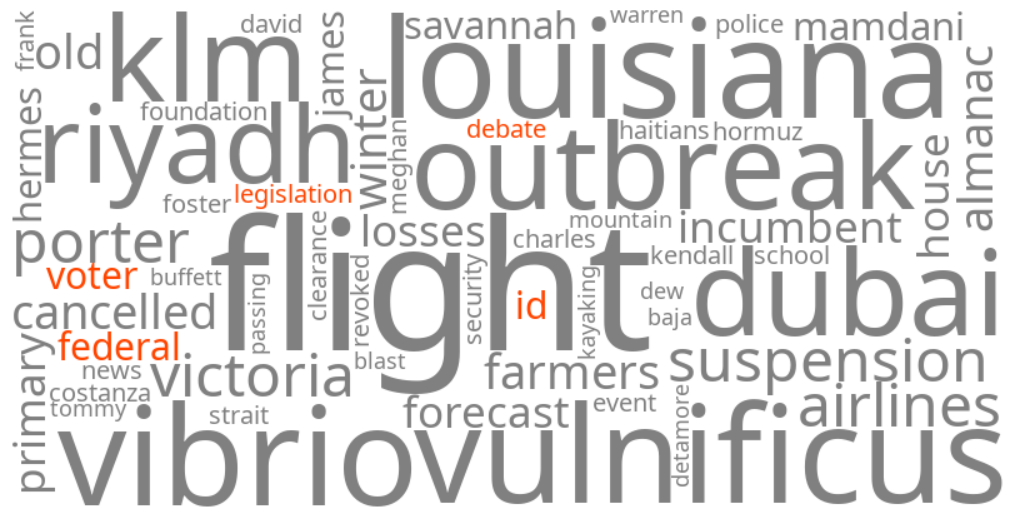
federal voter id legislation debate
Summary (tl;dr)
A contentious debate within the U.S. Senate, driven by former President Donald Trump and conservative Republicans, has delayed an agreement on federal voter identification legislation while senators simultaneously worked to pass a short-term budget deal before their August recess and upcoming midterm elections.
Essential Background
For years, the debate over election integrity and voter identification laws has been a significant point of contention in American politics, with former President Donald Trump and many Republicans advocating for stricter rules, including proof of citizenship for voter registration and photo ID at polling places. This push is encapsulated in the proposed "SAVE America Act" (also known as the SAVE Act), a federal bill that aims to implement these requirements nationwide. Opponents argue such measures would disenfranchise eligible voters, particularly those with disabilities, and disproportionately affect minority groups. The bill has passed the House multiple times but has repeatedly stalled in the Senate due to a lack of sufficient votes to overcome a filibuster.
The Full Story
These keywords are trending as the U.S. Senate recently grappled with passing key legislation before its scheduled August recess, just months ahead of the November 3, 2026 midterm elections. Former President Donald Trump intensely pressured Senate Majority Leader John Thune and other Republicans to delay the recess until the controversial "SAVE America Act," a federal voter ID and proof-of-citizenship voting bill, along with an Iran-related budget package, could be passed.
A significant number of Republican senators, led by Senator Mike Lee, supported Trump's call to cancel the recess to advance the SAVE America Act. However, Majority Leader Thune resisted, citing that the bill lacked the 60 votes needed to overcome a Democratic filibuster and that vulnerable Republican incumbents required time to campaign in their home states.
Despite Trump's demands, the Senate successfully passed a short-term spending bill on Saturday, August 8, 2026, with overwhelming bipartisan support (90-6) to fund federal agencies through December 11, 2026, thereby averting a government shutdown before the midterms. However, a separate Republican-backed voter ID bill, a truncated version of the SAVE America Act focused solely on photo ID requirements, failed to advance in a 52-46 vote, falling short of the 60-vote threshold. With legislative matters largely concluded, the Senate has now entered its August recess.
Why It Matters
This trend highlights the ongoing political influence of former President Trump on the Republican Party's legislative agenda, particularly concerning election integrity and the implementation of stricter voting laws. The debate over federal voter ID legislation, like the SAVE America Act, carries significant implications for future elections, with proponents arguing it prevents fraud and opponents asserting it creates barriers to voting for millions of eligible citizens. The struggle to pass this legislation, even with a Republican-controlled Senate and White House, underscores the deep partisan divisions on voting rights and the procedural hurdles of the Senate filibuster. The successful passage of the short-term funding bill, however, averted a government shutdown, which would have had immediate negative economic and political consequences just before the critical midterm elections.
Geographic Location
- Capitol Building, Washington, D.C., District of Columbia, United States (U.S. Senate debates, votes on legislation, and enters recess)