 Law and Government
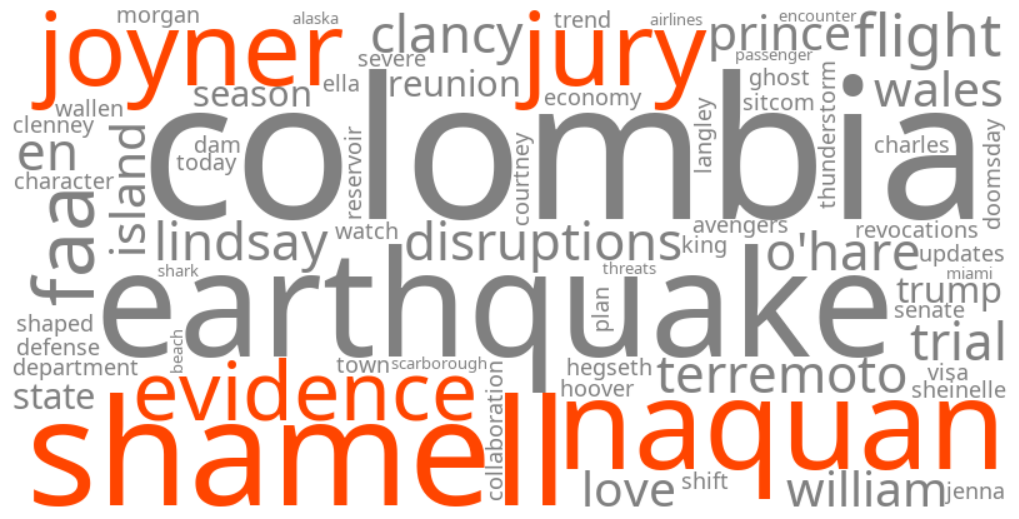
shamell naquan joyner jury evidence
Summary (tl;dr)
Jury members in the armed robbery trial of Shamell Naquan Joyner discovered previously overlooked evidence—a Chinese yuan and a suspicious white powder—hidden in clothing central to the case, leading to widespread astonishment and questions about evidence handling.
Essential Background
Shamell Naquan Joyner was indicted on 28 federal counts, including armed carjackings and multiple armed robberies of convenience stores and gas stations across the District of Columbia, Maryland, and Virginia, which allegedly occurred between April and May of 2023. His trial commenced on June 29, 2026, and involved a month-long legal proceeding in Washington, D.C.
The Full Story
The keywords are trending because during deliberations in Shamell Naquan Joyner's federal armed robbery trial, jurors unexpectedly found a Chinese yuan bill and a folded paper containing a suspicious white powder inside clothing that had been entered as evidence. This evidence had been missed by law enforcement investigators, prosecutors, and defense attorneys alike. U.S. District Judge Rudolph Contreras expressed his "amazement" at the oversight. Despite the unusual discovery, which the judge instructed them to disregard as formal evidence, the jury continued deliberations and ultimately convicted Joyner on 13 charges, including multiple armed robberies and a carjacking, but reached a deadlock on other counts. Joyner faces a mandatory minimum sentence of 31 years.
Why It Matters
This incident has drawn significant attention due to the highly unusual circumstance of a jury discovering critical, overlooked evidence, raising serious questions about the thoroughness of evidence handling by law enforcement and legal teams. The discovery, described by longtime Washington attorneys as an embarrassing and unprecedented slip-up, could have influenced the trial's outcome if it had been properly introduced as evidence, as some witnesses testified to the robber taking a Chinese yuan and Joyner paying with drugs. The event highlights the potential for human error in even high-stakes federal cases and its implications for justice and public trust.
Geographic Location
- United States District Court for the District of Columbia, Washington, D.C., District of Columbia, United States (federal armed robbery trial and jury deliberations)
- 1301 13th Street Northwest, Washington, D.C., District of Columbia, United States (armed robbery at Falcon Fuel gas station)
- Mount Vernon Triangle neighborhood, Washington, D.C., District of Columbia, United States (armed carjacking)
- 1100 Vermont Avenue Northwest, Washington, D.C., District of Columbia, United States (armed robbery at 7-Eleven)
- 7401 Georgia Avenue Northwest, Washington, D.C., District of Columbia, United States (armed robbery at 7-Eleven)
- 1645 Connecticut Avenue Northwest, Washington, D.C., District of Columbia, United States (armed robbery at 7-Eleven)
- 1325 2nd Street Northeast, Washington, D.C., District of Columbia, United States (armed robbery at 7-Eleven)
- 721 H Street Northeast, Washington, D.C., District of Columbia, United States (armed robbery at 721 Shop & Run)
- Alexandria, Virginia, United States (armed robbery at 7-Eleven)
- 9300 block of Georgia Ave., Silver Spring, Montgomery County, Maryland, United States (armed robbery at Exxon gas station)
- 8400 block of Georgia Ave., Silver Spring, Montgomery County, Maryland, United States (armed robbery at 7-Eleven)
- 1101 Annapolis Road, Odenton, Anne Arundel County, Maryland, United States (armed robbery at 7-Eleven)
- 7898 Ridge Road, Hanover, Anne Arundel County, Maryland, United States (armed robbery at Exxon Auto Service Center)