 Law and Government
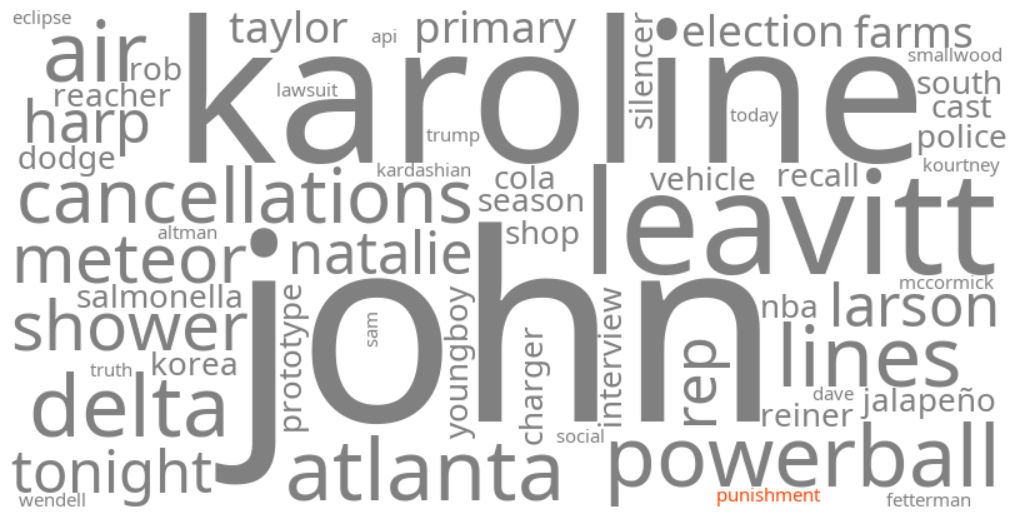
punishment
Summary (tl;dr)
The keyword "punishment" is currently trending in "Law and Government" due to several significant global developments, including a new U.S. Supreme Court case challenging excessive fines, Lebanon's historic abolition of the death penalty, and international condemnation following recent executions in Singapore.
Essential Background
The concept of punishment is fundamental to legal systems worldwide, encompassing a range of measures from financial penalties to imprisonment and capital punishment. These measures are typically governed by constitutional principles and international human rights laws aimed at ensuring fairness and preventing cruel or unusual treatment. In the United States, the Eighth Amendment protects against excessive fines and cruel and unusual punishments, a clause frequently reinterpreted by the Supreme Court. Internationally, there is an ongoing global movement advocating for the abolition of the death penalty, contrasting with its continued application in some nations. These foundational legal frameworks and persistent debates form the backdrop for the recent trending discussions on punitive justice.
The Full Story
"Punishment" is trending as the U.S. Supreme Court announced on July 20, 2026, it would hear arguments in Jouppi v. Alaska, a significant case challenging the Eighth Amendment's Excessive Fines Clause. The Court will determine whether the gravity of an offense, when assessing a fine's proportionality, should consider the specific defendant's actions or the underlying offense purely in the abstract. This case stems from the forfeiture of a $95,000 airplane due to the illegal transport of alcohol into a dry Alaskan community.
Further contributing to the trend, Lebanon's parliament made a historic decision on August 11, 2026, voting to abolish the death penalty, replacing it with life imprisonment with aggravated hard labor. This landmark move positions Lebanon as the first country in the Middle East to take such a step, marking a significant advancement for human rights in the region.
Conversely, the practice of capital punishment remains a contentious issue elsewhere, as Singapore carried out its sixteenth execution of the year on August 7, 2026. This execution drew strong condemnation from the European Union, Switzerland, Norway, and the United Kingdom, who collectively reiterated their firm opposition to the death penalty, describing it as cruel, inhumane, and irreversible.
Additionally, in the U.S., the Pennsylvania Supreme Court's March 2026 ruling in Commonwealth v. Lee, which found mandatory life without parole for felony murder unconstitutional under the state's prohibition against cruel punishments, became fully effective after the state's General Assembly failed to enact replacement legislation by the July 24, 2026 deadline. This decision impacts over 1,100 individuals currently serving such sentences, leading to new resentencing petitions.
Why It Matters
These recent developments collectively highlight the evolving global and domestic understanding of criminal justice and human rights. The U.S. Supreme Court's decision in Jouppi v. Alaska could redefine how "excessive" fines are evaluated under constitutional law, potentially impacting property rights and the scope of punitive measures nationwide. Lebanon's abolition of the death penalty represents a major victory for human rights organizations and could encourage similar reforms in other countries, reflecting a growing international consensus against capital punishment. The international outcry against Singapore's continued use of the death penalty underscores the ongoing global divisions on ultimate punishments and keeps discussions about state authority versus human dignity at the forefront of legal and governmental discourse. The Pennsylvania ruling also demonstrates a significant state-level re-evaluation of mandatory sentencing, emphasizing individual culpability and potentially influencing criminal justice reforms across other U.S. states.
Geographic Location
- Supreme Court of the United States, Washington, D.C., District of Columbia, United States (Supreme Court agreeing to hear arguments in Jouppi v. Alaska)
- Beirut, Beirut Governorate, Lebanon (Lebanon's parliament votes to abolish the death penalty)
- Singapore (execution carried out and international condemnation)
- Pittsburgh, Allegheny County, Pennsylvania, United States (Pennsylvania Supreme Court ruling in Commonwealth v. Lee becomes effective)