 Law and Government
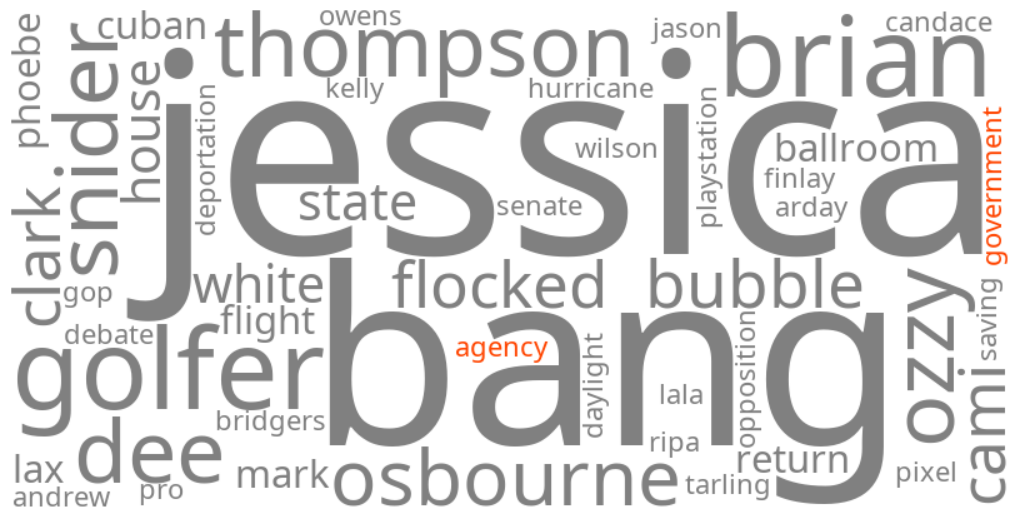
government agency
Summary (tl;dr)
The terms "government agency" and "politics" are trending due to a flurry of recent actions by the U.S. administration and federal agencies, including significant regulatory changes, controversial infrastructure projects facing legal challenges, and ongoing congressional oversight, all contributing to a dynamic political landscape.
Essential Background
The current period is marked by the second year of Donald Trump's presidency, characterized by an active approach to reshaping federal governance through executive actions, regulatory adjustments, and policy initiatives. This includes a focus on "Restoring Gold Standard Science" and efforts to reduce regulatory burdens. The administration has previously engaged in significant policy shifts and faced legislative challenges, setting a precedent for current debates on presidential authority and government operations.
The Full Story
In August 2026, searches for "government agency" and "politics" are surging amidst several high-profile developments and controversies within the United States federal government. The Trump administration is actively appealing to the U.S. Supreme Court to permit the continuation of a controversial White House ballroom construction project, which an appeals court had previously halted due to a lack of necessary congressional approval. Concurrently, the Financial Crimes Enforcement Network (FinCEN), a bureau of the U.S. Department of the Treasury, has permanently ended beneficial ownership reporting requirements for millions of small businesses, a move championed by President Trump as a significant reduction in regulatory burden.
Further contributing to the trend, the U.S. Department of Homeland Security (DHS) has extended a Jones Act waiver, impacting shipping between U.S. ports, but has introduced substantial new procedural requirements for its use. Meanwhile, the Department of Energy (DOE) announced updated operating directives for its National Laboratories, plants, and sites, aimed at modernizing operations and improving efficiency in line with the President's "Restoring Gold Standard Science" initiative. Adding to the political discussions, congressional committees in the U.S. House of Representatives are holding hearings to scrutinize Diversity, Equity, and Inclusion (DEI) programs, with members questioning whether institutions are truly dismantling these programs or merely rebranding them. The Office of Management and Budget (OMB) is also a focal point, having proposed a rule change that would fundamentally alter how federal grants are awarded, potentially giving senior political appointees greater influence over funding decisions to align with presidential policy priorities.
Why It Matters
These trending topics reflect a period of intense activity and ideological shifts within the executive branch, as it seeks to reshape the operational mandates and regulatory landscape of federal agencies. The legal battle over the White House ballroom underscores ongoing tensions between presidential authority and the checks and balances of the legislative and judicial branches. Actions by FinCEN and the Department of Energy have direct implications for the economy, small businesses, and the nation's scientific and energy sectors. The scrutiny of DEI programs and the proposed changes to federal grant processes signal a broader political push to realign governmental and institutional policies, which could have long-term consequences for public services, civil rights, and the allocation of federal resources. Collectively, these developments highlight a dynamic period in American politics where the role, scope, and direction of government agencies are being actively debated and redefined.
Geographic Location
- Washington, D.C., District of Columbia, United States (Multiple federal agency actions, Supreme Court appeal, congressional hearings, White House ballroom construction, OMB proposed rule)